Skip to content
Table of Contents
Spray painting kitchen cabinets is one of the fastest and most cost-effective ways to refresh a kitchen without committing to a full remodel. Instead of replacing cabinets, which can account for nearly 40% of a renovation budget, spraying delivers a smooth, factory-like finish at a fraction of the cost and time.
Consequently, homeowners increasingly prefer this method for modern kitchen upgrades.
In this expert guide, we explain everything you need to know about spray finishing cabinets, including tools, preparation steps, best practices, common mistakes, and professional techniques.
Whether you are considering DIY improvements or managing a larger project, you will learn how to achieve durable, streak-free results with confidence.
Spray Painting Kitchen Cabinets
Spray painting kitchen cabinets refers to applying paint using a spray system such as an airless sprayer or HVLP (High Volume Low Pressure) gun instead of traditional brushes or rollers. The paint is atomized into fine particles and evenly distributed across the surface.
As a result, the finish appears:
- Smoother
- More uniform
- Free from brush strokes
- Faster to apply
Compared to manual painting, painting kitchen cabinets with a sprayer provides superior coverage in tight corners, edges, and detailed profiles.
For example, shaker-style or paneled doors often show roller marks with conventional methods, whereas spraying delivers a consistent, professional look.
Moreover, modern kitchen cupboard spray paint products are designed with durability and adhesion in mind, ensuring cabinets withstand daily wear, grease, and moisture.
Why Should You Paint Kitchen Cabinets With Sprayer?
Kitchen cabinets are one of the most visible elements in a home. Consequently, outdated colors or worn finishes can make the entire space look tired, even if everything else is updated.
Key reasons spray finishing matters:
- Cost savings: Up to 70% cheaper than full cabinet replacement
- Time efficiency: Most projects are completed within days, not weeks
- Professional appearance: Factory-smooth results
- Less disruption: Minimal demolition or construction
- Sustainability: Reduces waste by reusing existing cabinetry
Learning how to spray paint kitchen cabinets is both practical and valuable.
Best Practices To Paint Kitchen Cabinets
- Proper Surface Preparation
Preparation determines at least 80% of the final result. Skipping this step often leads to peeling or uneven paint.
Essential prep tasks include:
- Removing doors, hinges, and hardware
- Cleaning grease with degreaser or TSP
- Light sanding for adhesion
- Filling dents or scratches
- Applying high-quality primer
Moreover, labeling each door ensures easy reassembly later.
- Choosing the Right Spray Equipment
Different sprayers suit different project sizes.
- HVLP sprayer: Ideal for precision and small projects
- Airless sprayer: Faster coverage for large kitchens
- Compressed air sprayers: Excellent control, but require practice
For beginners, HVLP systems typically offer better control and less overspray.
- Selecting the Right Paint
Not all paints are suitable for cabinets.
Look for:
- Acrylic or enamel formulas
- Fast-drying properties
- Hard, washable finish
- Low VOC options
Professional-grade kitchen cupboard spray paint provides stronger adhesion and durability compared to standard wall paints.
- Spray Technique
Technique significantly affects finish quality.
Best practices:
- Maintain 6-8 inches distance
- Use steady, overlapping strokes
- Spray in thin coats
- Move continuously to prevent drips
Consequently, multiple thin layers outperform one thick coat every time.
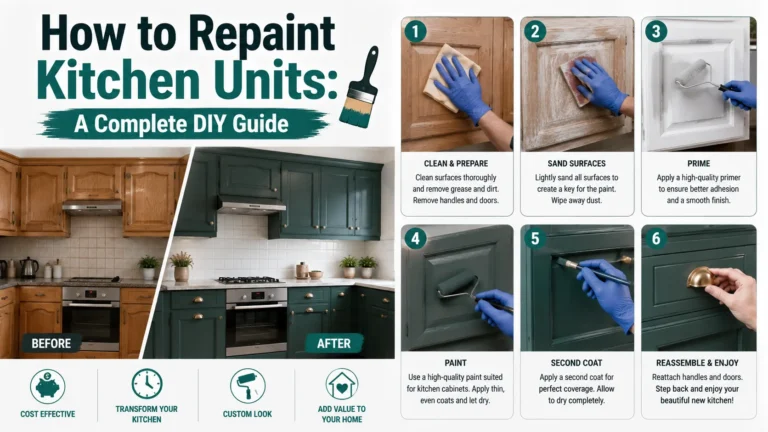
How To Spray Painting Kitchen Cabinets: Step-by-Step Guide
Below is a simple workflow to achieve consistent results when spray paint kitchen cabinets projects are undertaken.
Step 1: Remove and Label
Detach all cabinet doors and drawers. Label each piece.
Step 2: Clean Thoroughly
Use a degreaser to remove oils and cooking residue.
Step 3: Sand Lightly
Scuff surfaces with 180–220 grit sandpaper for better bonding.
Step 4: Prime
Apply a bonding primer using your sprayer or roller.
Step 5: Sand Again
Lightly sand primer for smoothness.
Step 6: Spray Paint
Apply 2–3 thin coats with proper drying time between layers.
Step 7: Cure and Reassemble
Allow 24–48 hours before reinstalling hardware.
Consequently, following this systematic approach minimizes mistakes and ensures a professional finish.
Common Mistakes You Should Avoid
Even experienced DIYers encounter issues. However, understanding these pitfalls helps prevent costly rework.
Frequent problems include:
- Overspray: Poor masking causes paint on floors or walls
- Runs and drips: Applying too much paint at once
- Orange peel texture: Incorrect pressure or paint viscosity
- Poor adhesion: Skipping primer or cleaning
- Dust contamination: Painting in unsealed spaces
Therefore, creating a clean, ventilated workspace is critical. Many professionals use temporary plastic enclosures to control dust and airflow.
Conclusion
Spray painting kitchen cabinets offers a practical, efficient, and professional way to upgrade kitchens without expensive replacements. By combining proper preparation, the right equipment, and careful technique, anyone can achieve smooth, factory-grade results.
Furthermore, this method saves time, reduces costs, and delivers long-lasting finishes that enhance aesthetics. Consequently, spray finishing remains one of the smartest kitchen improvement strategies available today.
With the guidance above, you are now equipped to plan and execute your project confidently.
People also ask
Is spray painting kitchen cabinets better than brushing or rolling?
Yes. Spraying produces a smoother, streak-free finish and covers intricate surfaces more evenly.
How long does sprayed cabinet paint last?
With proper prep and quality materials, finishes typically last 8-12 years or longer.
Can I spray paint cabinets without removing them?
It is possible, but removing doors ensures better coverage and prevents overspray issues.
What type of paint works best for kitchen cabinets?
Acrylic enamel or waterborne alkyd paints provide durability, washability, and adhesion.
How long should cabinets cure before use?
Light use after 24-48 hours; full curing usually takes 5-7 days.