Skip to content

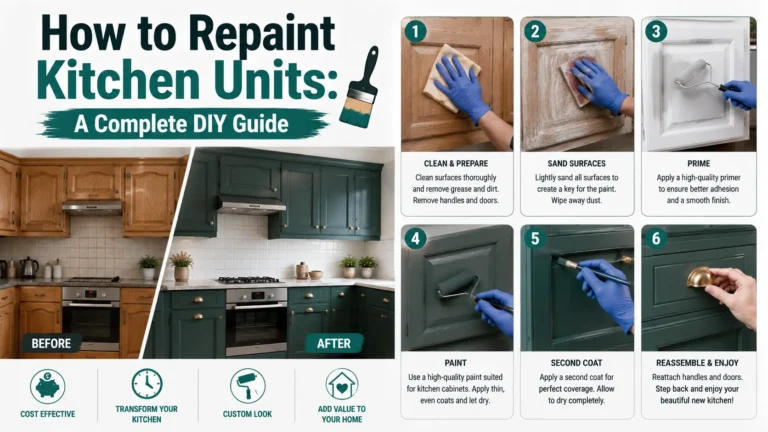
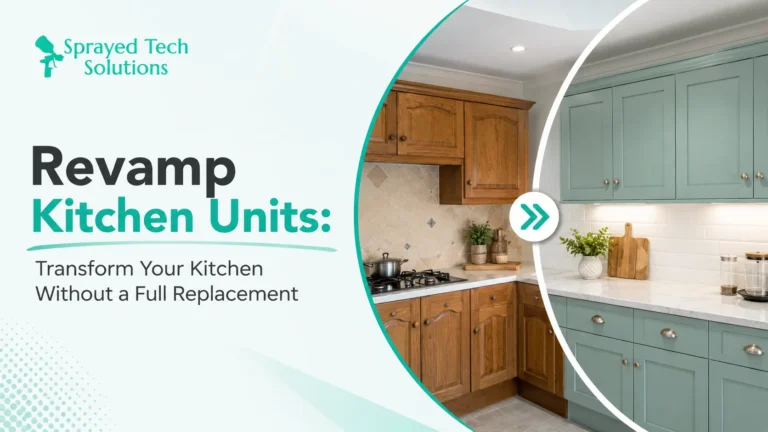
Spray painting kitchen cabinets is one of the most effective ways to transform an outdated kitchen without the cost and disruption of a complete replacement. Instead of removing perfectly usable cabinets, homeowners can update their appearance with a fresh colour and a smooth, professional finish.
However, achieving a factory-like result involves much more than choosing the right paint and picking up a spray gun. Proper preparation, suitable materials, controlled spraying and sufficient drying time all play an important role.
After years of working on kitchen transformations, I’ve seen how small mistakes during preparation can affect the entire finish. Poor cleaning, missed edges, dust contamination and rushed drying times can lead to peeling paint, rough surfaces and uneven coverage.
In this guide, I’ll explain how to spray paint kitchen cabinets properly, from removing the doors and preparing the surfaces to applying primer and topcoats. I’ll also share some of the professional methods we use to achieve a smooth, durable finish.
What Is Spray Painting Kitchen Cabinets?

Spray painting kitchen cabinets involves applying specialist coatings using professional spray equipment rather than traditional paintbrushes or rollers.
The paint is broken into fine particles and distributed evenly across the cabinet surfaces. This helps create a consistent finish without the visible brush marks or roller texture often associated with conventional painting methods.
Professional cabinet spraying is particularly effective for:
- Shaker-style kitchen doors
- Flat cabinet panels
- Cupboard doors and drawer fronts
- Decorative profiles and detailed edges
- Kitchen end panels and visible cabinet frames
The main advantage is the appearance. When the surfaces are prepared correctly and the coating is applied properly, spraying can give kitchen cabinets a smooth, factory-like finish.
Why Should You Paint Kitchen Cabinets With a Sprayer?
Kitchen cabinets have a major influence on the overall appearance of a kitchen. Even when the layout and appliances are still in good condition, faded colours, outdated finishes, and worn cupboard doors can make the entire room feel tired.
Spray painting offers a way to refresh the existing cabinets without replacing everything.
Main Benefits of Kitchen Cabinet Spraying
1. A smooth, professional finish
Spray equipment distributes the coating evenly, helping create a consistent appearance without brush strokes or roller marks.
2. More affordable than replacing cabinets
If the existing kitchen units are structurally sound, spraying can be an alternative to buying completely new cabinets.
3. Less disruption
You can update the appearance of your kitchen without necessarily removing the existing cabinet framework or undertaking a full renovation.
4. More colour choices
Spraying allows homeowners to choose from a wide range of colours and finishes to suit their kitchen design.
5. Less unnecessary waste
Refreshing existing cabinets can help keep usable furniture out of landfill instead of replacing it simply because the colour looks outdated.
Why Proper Preparation Matters More Than the Paint

Spray painting kitchen cabinets can look straightforward, but thorough preparation is what makes the difference between an average result and a professional finish.
It isn’t just one preparation step that determines the outcome. Everything works together: sanding, degreasing, filling imperfections, allowing surfaces to dry, and carefully removing dust before spraying begins.
Miss one part of that process, and it can affect the entire finish.
In my experience, some of the most common problems we are called back to fix are poor adhesion, peeling or flaking paint, and rough finishes caused by dust or overspray settling on wet coatings.
These problems often happen because cleaning has been rushed, ventilation has been overlooked, or drying times have not been followed properly.
That is why we take a systematic approach to every kitchen spraying project.
1. Remove Kitchen Doors and Drawers
Taking the doors off is an important part of achieving complete coverage.
Spraying cabinet doors while they are still attached might appear quicker, but it makes it difficult to reach every edge, back, and corner properly.
It can also lead to:
- Paint collecting around hinges
- Missed areas along door edges
- Uneven coverage
- Overspray on surrounding surfaces
- Paint building up around fittings
When doors are removed and prepared separately, every surface can receive the same attention.
We label the doors and drawers before removing them so that each component can be returned to its correct position after the work is completed.
The doors can then be positioned or hung appropriately for spraying, allowing better access to their edges and other difficult areas.
2. Thoroughly Degrease Every Surface
Kitchen cabinets collect grease, cooking residue, fingerprints, and everyday dirt.
Even surfaces that appear clean can contain contamination that affects how well primer and paint adhere.
We thoroughly degrease the doors, drawers, and other surfaces before moving on to the next stage.
For our process, every door is carefully cleaned and then wiped down with acetone where suitable for the coating system and substrate.
The important thing is to use compatible cleaning products and allow the surface to dry fully before applying any coating.
3. Fill Dents, Scratches and Imperfections
Before spraying, inspect every door and panel for damage.
Small dents, scratches, and imperfections can become more noticeable once a new colour is applied, particularly under kitchen lighting.
We fill suitable imperfections and prepare the repaired areas so that the surface is as consistent as possible.
This stage helps prevent minor damage from showing through the finished coating.
4. Sand the Surfaces
Sanding creates a suitable surface for the coating system and helps remove minor imperfections.
The amount of sanding required depends on the existing finish and the condition of the cabinets.
We pay particular attention to edges, corners, and detailed profiles, where old coatings and imperfections can be easier to miss.
After sanding, the surfaces must be cleaned thoroughly to remove dust.
5. Wipe Down and Use a Tack Rag
Before spraying begins, every surface needs a final check.
We wipe down the prepared doors and use a tack rag to pick up remaining fine dust.
This is an important step because dust particles can settle into wet paint and leave small bumps or rough patches.
The doors should be clean, dry, and ready for the next stage before primer is applied.
Choosing the Right Spray Equipment
The equipment you use can influence coverage, control, and the quality of the finished surface.
Different spray systems are available, but the right choice depends on the coating, project size, and application requirements.
HVLP Sprayers
HVLP stands for High Volume Low Pressure.
These systems are commonly used for detailed finishing work because they offer control over the spray pattern and paint application.
They can be useful for smaller projects and furniture components, although the equipment and coating must be compatible.
Airless Sprayers
Airless systems use high pressure to atomise the coating.
They can provide efficient coverage on larger surfaces and are commonly used for professional painting work.
The correct tip and settings depend on the coating manufacturer’s recommendations.
Why Professional Equipment Matters
Professional spraying is not simply about owning an expensive machine.
The operator needs to understand how the equipment, coating, spray pattern and application technique work together.
Consistent movement, correct settings and proper surface preparation are all necessary for an even finish.
Selecting the Right Paint and Primer for Kitchen Cabinets
Kitchen cabinets experience regular handling, cleaning, moisture and everyday wear.
That means ordinary wall paint is not the right choice for this type of project.
A suitable cabinet coating system should provide good adhesion, a smooth appearance and the durability needed for regular use.
Why We Use the Intercoat Aqualine System
For our kitchen spraying work, we use the Intercoat Aqualine system, with a purpose-built primer and topcoat designed for this type of application.
Choosing a compatible primer and topcoat is important because the two products need to work together as part of the complete finishing system.
The primer prepares the surface for the topcoat, while the finishing coat provides the final colour and appearance.
Using the appropriate products, following the manufacturer’s instructions and allowing the correct drying times all contribute to the finished result.
The right coating system also needs to be selected according to the existing cabinet material and finish.
How We Spray Kitchen Cabinets: Our Professional Process
Once the doors and other surfaces have been cleaned, repaired, sanded and prepared, the spraying process can begin.
We use a controlled mobile spray booth with proper extraction to help manage airborne overspray and dust during application.
This provides a more controlled working environment than simply spraying in an open kitchen.
Step 1: Prepare the Spray Area
Before spraying, we prepare the working area and ensure the appropriate masking, extraction and ventilation arrangements are in place.
The aim is to reduce contamination and prevent overspray from reaching surrounding surfaces.
Step 2: Apply the Primer
The prepared surfaces receive the appropriate primer as part of the Intercoat Aqualine system.
The primer creates a suitable base for the topcoat and helps achieve consistent coverage.
Application and drying times are followed according to the manufacturer’s instructions.
Step 3: Sand and Clean Between Coats
We sand and clean between every coat where required by the coating system.
This helps remove minor imperfections and dust particles before the next layer is applied.
Skipping this stage can leave unwanted texture beneath the finished coating.
Step 4: Apply the Topcoat
Once the primer is properly prepared, the topcoat is applied using controlled spray movements.
The spray gun should move consistently, with the correct distance and application settings maintained throughout the process.
Rather than applying one heavy coat, the coating is built up according to the manufacturer’s recommended application method.
Step 5: Inspect the Finished Surfaces
After application, every door and panel should be inspected for:
- Consistent colour and coverage
- Runs or sags
- Dust contamination
- Uneven texture
- Missed edges or corners
- Visible surface imperfections
Any required corrections should be addressed according to the coating system’s instructions before reassembly.
Common Mistakes When Spray Painting Kitchen Cabinets
Even a good-quality coating can produce disappointing results when important steps are rushed.
Here are some of the problems that can affect kitchen cabinet spraying.
Poor Paint Adhesion
Peeling or flaking paint is often linked to contamination, inadequate preparation or an unsuitable coating system.
Thorough degreasing, correct sanding and compatible products help reduce the risk of adhesion problems.
Dust and Overspray Contamination
Dust settling on wet paint can create a rough finish.
Overspray can also affect nearby surfaces or settle on components that have already been coated.
A controlled spray area, suitable extraction and proper cleaning help manage these problems.
Spraying Doors While They Are Still Attached
Leaving doors in place makes it difficult to reach every edge and corner.
It can also result in paint collecting around hinges or missed areas that become obvious once the kitchen is finished.
Removing the doors allows them to be prepared and sprayed more thoroughly.
Applying Coats Too Heavily
Trying to cover a surface in one heavy application can create runs, sags and uneven texture.
Following the manufacturer’s recommended coating thickness and application technique is much more reliable.
Rushing Drying Times
Applying another coat too early can affect the finish and the performance of the coating system.
Allow each layer to dry according to the manufacturer’s instructions before moving on.
Why We Use a Controlled Mobile Spray Booth
The working environment is an important part of professional kitchen cabinet spraying.
Dust, airborne particles and overspray can affect wet coatings and leave imperfections in the finished surface.
We use a controlled mobile spray booth with proper extraction to help manage these issues during the spraying process.
This forms part of our wider preparation and application system, which includes:
- Removing doors and drawers
- Filling surface imperfections
- Thorough sanding
- Cleaning and degreasing
- Wiping down with suitable products
- Tack ragging before spraying
- Using the Intercoat Aqualine primer and topcoat system
- Sanding and cleaning between coats
Taking the time to complete these steps properly is what helps us achieve a smooth, consistent finish.
How Long Does Spray-Painted Kitchen Cabinet Paint Last?
The lifespan of a sprayed kitchen finish depends on several factors.
These include:
- The condition of the original cabinet surfaces
- The quality of the preparation
- The suitability of the primer and topcoat
- Correct application
- Sufficient drying and curing
- Everyday use and maintenance
A properly prepared and professionally sprayed kitchen should provide a durable finish when maintained correctly.
However, no coating is completely resistant to damage. Heavy impacts, harsh cleaning products, and excessive wear can affect the surface over time.
How to Look After Your Sprayed Kitchen Cabinets
Once the coating has fully cured according to the manufacturer’s instructions, maintenance is relatively straightforward.
For routine cleaning:
- Use warm water and a soft cloth.
- Avoid abrasive sponges and harsh cleaning chemicals.
- Wipe away grease and spills promptly.
- Avoid excessive moisture around cabinet edges.
- Do not use aggressive scrubbing on the painted surface.
With gentle care, a professionally finished kitchen can continue looking attractive for years.
Is Professional Kitchen Cabinet Spraying Worth It?
If your existing cabinets are in good structural condition, professional spraying can be a practical alternative to replacing the entire kitchen.
It allows you to change the colour and refresh the appearance while keeping much of the existing cabinetry.
Professional spraying may be worth considering if:
- Your kitchen doors are outdated but still sound.
- You want a smooth, factory-like finish.
- You do not have the equipment or experience for DIY spraying.
- You want all doors and panels finished consistently.
- You want to avoid the disruption of a complete kitchen replacement.
The quality of the result depends on the work carried out behind the scenes. Removing doors, preparing every surface, using a suitable coating system, and controlling the spraying environment all take time.
That is why professional kitchen spraying should be judged on the complete process, not simply the final colour.
Conclusion
Spray painting kitchen cabinets is an effective way to update a kitchen without replacing every cupboard and door.
However, achieving a smooth, durable finish requires a proper process. Thorough degreasing, careful sanding, filling imperfections, removing doors and allowing sufficient drying time all contribute to the final result.
In our work, we use the Intercoat Aqualine system and a controlled mobile spray booth with proper extraction. Every door is filled, sanded, cleaned, wiped down, and tack-ragged before spraying begins. We also sand and clean between coats to help achieve a consistent finish.
It takes longer than rushing through the job, but that attention to detail is what makes the difference.
If your kitchen cabinets are structurally sound but look outdated, professional spraying could be the practical way to give your kitchen a fresh appearance without the expense of a complete replacement.
Frequently Asked Questions
Is spray painting kitchen cabinets better than brushing or rolling?
Spraying generally provides a smoother, more consistent finish without visible brush strokes or roller marks. It is particularly useful for detailed cabinet doors and profiles.
Do kitchen cabinet doors need to be removed before spraying?
Removing the doors is strongly recommended for professional results. It allows the edges, backs and corners to be prepared and coated properly while reducing the risk of paint collecting around hinges.
How should I prepare kitchen cabinets before spraying?
Preparation usually includes removing doors and hardware, degreasing, filling imperfections, sanding, cleaning and removing dust. The exact process depends on the existing cabinet finish and coating system.
What primer is best for kitchen cabinets?
The best primer depends on the cabinet material and existing finish. A suitable professional primer should be compatible with the topcoat and designed for the intended application.
Why does paint peel off kitchen cabinets?
Peeling can result from grease or contamination, poor surface preparation, inadequate adhesion or an unsuitable coating system. Proper cleaning and preparation are essential.
Can kitchen cabinets be sprayed without removing them?
It is possible to spray some cabinet frames in place, but removing doors and drawers allows more complete coverage and better access to edges and corners.
How do professionals get a smooth kitchen cabinet finish?
Professional results come from thorough preparation, suitable primer and topcoat products, controlled spray application, a suitable working environment and careful sanding and cleaning between coats.
How should I clean professionally sprayed kitchen cabinets?
Once the coating has fully cured, use warm water and a soft cloth for routine cleaning. Avoid abrasive materials and harsh cleaning products that could damage the finish.
Is kitchen cabinet spraying cheaper than replacing the kitchen?
If the existing cabinets are in good condition, spraying can often be a more economical option than replacing the complete kitchen. The actual cost depends on the kitchen size, cabinet condition and amount of preparation required.