Skip to content
Window spraying has become one of the most popular ways to transform the appearance of homes and commercial buildings without the expense of replacing perfectly functional windows. Whether you want to modernise dated white uPVC frames with anthracite grey, refresh faded aluminium windows, or improve your property’s kerb appeal before selling, professional window spraying offers a cost-effective solution that delivers impressive results.
One of the biggest questions homeowners ask before investing in this service is, “How long does window spraying last?” It’s a sensible question because no one wants to spend money on a finish that begins peeling or fading after only a few years. The good news is that professionally sprayed windows can last well over a decade when completed using premium coatings, proper preparation, and expert application techniques.
The lifespan of sprayed windows depends on several factors, including the quality of the paint, the preparation process, local weather conditions, and how well the windows are maintained after spraying. Choosing a reputable spraying company often makes the difference between a finish that lasts for years and one that starts showing signs of wear much sooner.
This guide explains everything you need to know about the durability of window spraying, what affects its lifespan, how to maximise its longevity, and whether spraying is a better investment than replacing your windows entirely.
Understanding Window Spraying
Window spraying is more than simply applying a new coat of paint. Professional spraying companies use specialist industrial coatings that chemically bond with the window surface, creating a durable finish that looks factory-made rather than hand-painted. This process has grown rapidly across the UK because homeowners are looking for affordable ways to update their property’s appearance without the disruption and high costs associated with full window replacement.
Unlike traditional painting with brushes or rollers, professional spray equipment produces an even, smooth finish without visible brush marks. Modern spray coatings are designed specifically for materials such as uPVC, aluminium, composite, and certain timber frames. Once cured, these coatings become highly resistant to UV rays, moisture, scratches, and everyday wear.
Professional window spraying also offers tremendous flexibility in colour choices. Whether you prefer Anthracite Grey (RAL 7016), black, cream, Chartwell Green, or virtually any RAL colour, spraying allows homeowners to customise their property’s exterior while maintaining the existing window frames.
As sustainability becomes increasingly important, window spraying has also emerged as an environmentally friendly alternative to replacement. Instead of sending old frames to the landfill, homeowners can refresh existing windows, extending their lifespan while reducing waste.
What Is Window Spraying?
Window spraying is the process of applying specialist exterior coatings using professional spray equipment to completely change or restore the colour of existing window frames. Unlike ordinary household paint, these coatings are specifically formulated to bond with materials like uPVC and aluminium, creating a long-lasting protective finish.
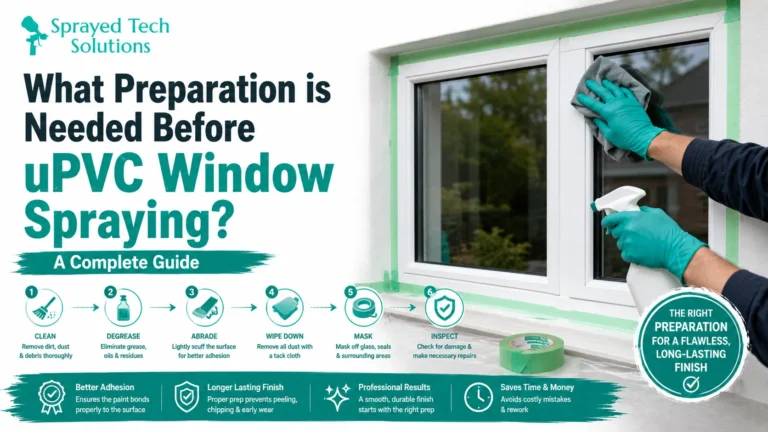
The process begins with a detailed inspection of the windows to ensure they are structurally sound. Any damaged seals, cracks, or hardware issues are addressed before spraying begins. The windows are then thoroughly cleaned using specialist degreasers that remove dirt, oils, waxes, and contaminants that could prevent proper adhesion.
After cleaning, professional sprayers carefully mask surrounding brickwork, glass, doors, gutters, and landscaping to protect every surface from overspray. Depending on the material being sprayed, adhesion promoters or primers may also be applied to maximise durability.
Using high-quality spray systems, technicians apply multiple thin coats rather than one heavy coat. This ensures consistent coverage while preventing drips, uneven textures, or weak spots. Once cured, the coating becomes an integral part of the window surface rather than sitting on top like ordinary paint.
Many homeowners are surprised by just how authentic professionally sprayed windows look. In most cases, the finish is virtually indistinguishable from factory-coloured frames, making it an attractive solution for updating older properties.
Which Window Materials Can Be Sprayed?
One of the greatest advantages of window spraying is its versatility. Professional coatings are suitable for a wide range of window materials, allowing homeowners to modernise their property’s appearance without replacing structurally sound frames.
The most commonly sprayed material is uPVC, which is found in millions of UK homes. White uPVC windows installed decades ago often become discoloured through years of exposure to sunlight and pollution. Spraying restores these windows while allowing homeowners to choose from hundreds of modern colours.
Aluminium windows are also excellent candidates for spraying. Although aluminium naturally resists corrosion, its factory finish can fade over time. Professional spraying revitalises aluminium frames while adding another layer of weather protection.
Composite windows, which combine multiple materials for strength and insulation, can also be successfully sprayed using the appropriate coatings and preparation techniques. Certain types of timber windows may also be refinished through spraying, provided the wood remains in good condition and is properly prepared beforehand.
Each material requires slightly different preparation methods, which is why experienced spraying specialists adjust their process according to the specific substrate. This tailored approach significantly improves adhesion and contributes to the long lifespan of the finished coating.
How Long Does Window Spraying Really Last?
The simple answer is that professionally sprayed windows typically last between 10 and 15 years, and in many cases even longer when maintained correctly. High-quality industrial coatings are engineered specifically for external environments, allowing them to withstand rain, frost, sunlight, pollution, and temperature fluctuations without losing their appearance.
Unlike standard decorative paints, specialist window coatings remain flexible after curing. This flexibility allows them to expand and contract naturally alongside the window frame during seasonal temperature changes, reducing the risk of cracking or peeling.
The lifespan also depends heavily on exposure. Windows located on south-facing elevations receive more direct sunlight, meaning UV resistance becomes particularly important. Coastal properties experience salt-laden air that can be more aggressive, while urban environments expose windows to higher levels of pollution. Premium coatings are designed to resist all of these challenges, but regular cleaning further extends their lifespan.
Professional installation is another major factor. Companies that follow proper preparation procedures and use industry-approved products consistently achieve significantly better durability than quick cosmetic spraying jobs. When homeowners choose experienced professionals, window spraying becomes a long-term investment rather than a short-term cosmetic upgrade.
The excellent longevity of window spraying is one of the main reasons it has become increasingly popular among homeowners looking to enhance kerb appeal while avoiding the substantial cost of replacing all their windows.
Average Lifespan of Professionally Sprayed Windows
When completed by experienced professionals using premium coatings, sprayed windows generally provide a lifespan of 10 to 15 years, with some installations remaining in excellent condition for close to 20 years under favourable conditions. This durability makes window spraying one of the most cost-effective exterior home improvements available today.
The secret lies in the combination of preparation, product quality, and application technique. Professional spraying companies spend considerable time cleaning and preparing surfaces before any coating is applied. This preparation ensures the paint chemically bonds with the substrate instead of merely sitting on the surface.
Modern industrial coatings also contain advanced UV inhibitors that minimise fading caused by sunlight. They are formulated to resist moisture penetration, mould growth, dirt accumulation, and minor impacts from everyday use. These protective properties help preserve both the colour and structural integrity of the finish for many years.
Routine maintenance also plays an important role. Cleaning sprayed windows a few times each year with warm water and a mild detergent helps remove dirt and pollutants that could gradually affect the coating. Avoiding abrasive cleaners or harsh chemicals further protects the finish, allowing homeowners to enjoy freshly sprayed windows for well over a decade.
Considering the relatively low cost compared with full replacement, achieving 10 to 15 years of outstanding performance offers exceptional value for money.
DIY vs Professional Window Spraying
Many homeowners consider spraying their own windows to save money, but there is a significant difference between DIY results and professional application. While DIY kits are widely available, they rarely achieve the same durability, appearance, or lifespan as industrial spraying systems operated by trained specialists.
The biggest challenge is preparation. Professionals spend hours cleaning, degreasing, masking, and preparing each window before spraying begins. DIY projects often skip or rush these crucial stages, resulting in poor adhesion and premature peeling. Even the highest-quality paint cannot compensate for inadequate surface preparation.
Equipment also matters. Professional airless and HVLP spray systems deliver an exceptionally fine, even coating that closely resembles a factory finish. Aerosol cans or basic consumer spray guns typically produce uneven coverage, visible texture, or overspray, especially on larger window frames.
The coatings themselves differ significantly. Professional spraying companies use commercial-grade products that are not commonly available to consumers. These coatings offer superior UV resistance, flexibility, scratch resistance, and weather protection, allowing them to last substantially longer than standard DIY alternatives.
Although professional window spraying involves a higher upfront investment, it usually proves far more economical over time. A professionally applied finish can last more than a decade with minimal maintenance, while DIY finishes often require repairs or complete respraying much sooner. For homeowners seeking a flawless appearance and maximum longevity, professional spraying remains the clear choice.
Factors That Affect the Lifespan of Window Spraying
Although professionally sprayed windows can last 10 to 15 years or more, their actual lifespan is influenced by several important factors. Two homes sprayed on the same day with the same colour can age differently depending on the quality of preparation, the products used, exposure to weather, and ongoing maintenance. Understanding these factors helps homeowners make informed decisions and ensures they get the maximum return on their investment.
Professional spraying companies know that durability starts long before the paint leaves the spray gun. Every stage of the process—from cleaning the surface to allowing the coating to cure properly—plays a role in determining how long the finish will remain vibrant and protective. Cutting corners during any part of the project may reduce the lifespan significantly, even when premium paints are used.
Environmental conditions also deserve attention. Homes located near the coast, busy roads, or industrial areas are exposed to harsher elements than properties in quieter rural locations. Strong UV rays, salty sea air, pollution, and constant moisture all contribute to the gradual ageing of exterior coatings. Thankfully, modern spray coatings are engineered to resist these challenges when correctly applied.
Let’s take a closer look at the four biggest factors that determine how long window spraying will last.
Surface Preparation
If there is one stage that separates a long-lasting professional finish from a disappointing one, it is surface preparation. Even the highest-quality spray coating cannot bond properly to a dirty, greasy, or damaged surface. This is why experienced window spraying specialists often spend more time preparing the windows than actually spraying them.
Preparation begins with a deep clean using specialist cleaning solutions that remove years of built-up dirt, silicone residue, oxidation, algae, and environmental contaminants. Unlike household cleaners, these professional degreasers are specifically formulated to leave the surface completely free of oils that could interfere with paint adhesion. Any remaining contamination can create weak points where peeling or bubbling may develop later.
After cleaning, technicians carefully inspect every frame for scratches, chips, damaged seals, or minor imperfections. Small defects are repaired before spraying begins to ensure the final finish is smooth and uniform. The surrounding glass, brickwork, doors, fascias, and landscaping are then meticulously masked to protect them from overspray. Proper masking is not only about neatness—it also allows technicians to spray confidently and achieve consistent coverage across every edge and corner.
Some window materials also require specialist adhesion promoters or primers before the colour coat is applied. These products create a stronger chemical bond between the coating and the frame, particularly on smooth uPVC or powder-coated aluminium. Skipping this step may save time initially, but it often results in reduced durability over the long term.
Professional preparation forms the foundation of a finish that can withstand years of changing weather, temperature fluctuations, and everyday wear. It is one of the main reasons professionally sprayed windows consistently outperform DIY projects.
Quality of Paint and Coatings
Not all spray paints are created equal. One of the biggest misconceptions among homeowners is that any exterior paint will provide similar results. In reality, the lifespan of window spraying depends heavily on the type of coating used, and professional-grade products are in an entirely different league from standard retail paints.
Specialist window coatings are manufactured using advanced polyurethane or acrylic technologies that are specifically designed for exterior architectural surfaces. These coatings are formulated to resist fading caused by ultraviolet radiation, repel water, tolerate extreme temperature changes, and maintain flexibility as window frames naturally expand and contract throughout the seasons.
High-quality coatings also contain superior pigments that help preserve colour accuracy over time. Popular shades such as Anthracite Grey (RAL 7016), Black (RAL 9005), White (RAL 9016), and Chartwell Green remain vibrant for years without significant fading when premium products are used. Cheaper paints often lose their richness much sooner, particularly on elevations that receive prolonged direct sunlight.
Scratch resistance is another important advantage of industrial coatings. Everyday contact from opening windows, cleaning frames, or accidental knocks is far less likely to damage professionally applied finishes. Many commercial coatings also include chemical resistance, making them easier to clean without affecting the paint itself.
Professional spraying companies usually select products that have been independently tested for long-term outdoor performance. Although premium coatings cost more than standard paints, they significantly reduce the need for future repairs or respraying, making them the more economical option over the life of the windows.
Weather and Environmental Conditions
No exterior surface remains untouched by the environment, and sprayed windows are no exception. While today’s industrial coatings are designed to perform exceptionally well outdoors, local climate and environmental exposure still influence how long the finish maintains its original appearance.
Sunlight is one of the most significant factors. South-facing windows receive more ultraviolet exposure throughout the year, which gradually affects even the highest-quality coatings. Premium paints include UV stabilisers that dramatically slow this process, helping colours remain vibrant for well over a decade. Lower-quality products, however, often begin fading much earlier.
Rain, snow, frost, and fluctuating temperatures also place continuous stress on exterior coatings. During winter, window frames repeatedly expand and contract as temperatures change between day and night. Professional spray coatings remain flexible enough to accommodate this natural movement without cracking or separating from the surface.
Properties located near the coast experience additional challenges from salt-laden air. Salt particles can accelerate the ageing of exterior finishes if they are allowed to accumulate over long periods. Similarly, homes situated close to busy roads may collect higher levels of traffic pollution, dust, and airborne contaminants that gradually dull the finish. Regular cleaning removes these deposits before they have an opportunity to affect the coating.
Even heavy rainfall can be beneficial by naturally washing away loose dirt from sprayed frames. Combined with occasional maintenance cleaning, professionally sprayed windows continue to look fresh despite years of exposure to changing weather conditions.
Choosing an experienced spraying contractor becomes especially important in challenging environments because they can recommend coatings specifically designed for local conditions and ensure correct application for maximum durability.
Installation and Application Technique
The final appearance and longevity of sprayed windows depend not only on the products used but also on the skill of the person applying them. Professional spraying is both a technical process and an art form, requiring experience, precision, and careful attention to detail throughout every stage of the project.
Experienced technicians understand how environmental conditions affect application. Temperature, humidity, wind speed, and even airborne dust influence how coatings cure and bond with the surface. Professional contractors carefully monitor these conditions before beginning work, avoiding unsuitable weather that could compromise the final finish.
Rather than applying one thick coat, professionals build durability through several thin, even layers. This approach allows each coat to flash off correctly before the next is applied, producing a smooth factory-like finish without runs, sagging, or uneven texture. Thin layers also cure more effectively, creating a stronger bond that withstands years of use.
Spray equipment plays a major role as well. Commercial HVLP (High Volume Low Pressure) and air-assisted airless systems atomise the coating into extremely fine particles, ensuring consistent coverage across every corner, edge, and profile of the window frame. The result is an even finish that closely resembles factory-manufactured coloured windows rather than traditional painted surfaces.
Professional installers also follow manufacturer-recommended curing times before removing masking materials or exposing the coating to heavy cleaning. Allowing the finish to cure properly ensures maximum hardness and chemical resistance, reducing the risk of early damage.
Ultimately, even the best coating can only perform as well as it is applied. Investing in an experienced window spraying company dramatically increases the likelihood of achieving a finish that remains attractive, durable, and low maintenance for well over a decade.
How to Make Sprayed Windows Last Longer
Investing in professional window spraying is only the first step. If you want your newly sprayed windows to maintain their fresh, factory-like appearance for as long as possible, regular care and proper maintenance are essential. The good news is that sprayed windows require very little upkeep compared to many other exterior finishes. A few simple habits can add several years to the lifespan of the coating while keeping your property looking clean and well maintained.
One of the biggest advantages of modern spray coatings is their resistance to dirt, moisture, and UV damage. Even so, environmental contaminants such as road dust, bird droppings, tree sap, pollen, and air pollution can build up over time. While these substances may not immediately damage the coating, leaving them on the surface for extended periods can gradually reduce the finish’s appearance.
Regular inspections are equally important. Checking your window frames every few months allows you to identify any small chips, scratches, or seal issues before they become larger problems. Professional spraying companies can often carry out minor touch-ups quickly, preventing moisture from reaching the substrate and preserving the integrity of the coating.
Another key consideration is protecting the finish from unnecessary impact. Although professional coatings are highly durable, repeatedly dragging ladders, garden tools, or heavy furniture against window frames can eventually cause scratches. Being mindful during home maintenance or gardening work helps keep your sprayed windows looking like new.
The beauty of professionally sprayed windows is that they are designed for long-term performance with minimal effort. By combining occasional cleaning with sensible care, homeowners can often enjoy a flawless finish for well beyond the expected lifespan.
Cleaning and Maintenance Tips
Cleaning sprayed windows is surprisingly straightforward, but using the correct methods makes a significant difference in preserving the finish. Unlike traditional painted surfaces, professional spray coatings are formulated to withstand normal washing without losing their colour or protective properties. Even so, harsh cleaning techniques should always be avoided.
For routine maintenance, warm water mixed with a mild pH-neutral detergent is usually all that is required. A soft microfibre cloth or non-abrasive sponge effectively removes dust, pollen, fingerprints, and light grime without scratching the coating. After cleaning, rinse the frames with clean water and dry them using a soft cloth to prevent water spots.
Avoid using abrasive pads, wire brushes, scouring powders, or aggressive chemical cleaners. Products containing solvents, acetone, bleach, or ammonia may gradually affect the coating’s surface if used repeatedly. Pressure washers should also be used carefully, as directing high-pressure water too closely at seals or frame edges can cause unnecessary wear.
Seasonal cleaning is generally sufficient for most homes, although properties near busy roads, industrial areas, or the coast may benefit from more frequent washing. Salt deposits, pollution, and airborne contaminants should not be allowed to accumulate for long periods.
To maximise durability, homeowners should also:
| Maintenance Task | Recommended Frequency |
| Wash window frames | Every 3–6 months |
| Inspect for chips or scratches | Twice a year |
| Remove bird droppings immediately | As needed |
| Check seals and trims | Annually |
| Professional inspection | Every 3–5 years |
Following these simple maintenance practices helps preserve both the appearance and protective qualities of the sprayed finish, ensuring it continues to enhance your home’s kerb appeal for many years.
Common Mistakes to Avoid
Even the highest-quality spray coating can have its lifespan reduced if homeowners unknowingly make a few common mistakes. Fortunately, most of these issues are easy to avoid once you understand how sprayed finishes perform.
One frequent mistake is attempting to clean newly sprayed windows before the coating has fully cured. Although the surface may feel dry within a short period, industrial coatings continue hardening for several days. Cleaning too soon may leave marks or reduce the finish’s overall durability. Always follow the contractor’s recommended curing time before washing the frames.
Another common issue is using unsuitable cleaning products. Many homeowners assume stronger chemicals produce better results, but harsh solvents often do more harm than good. Mild cleaning solutions are all that is needed to maintain professionally sprayed windows.
DIY touch-ups also cause problems. Matching the original colour, texture, and spray pattern without professional equipment is extremely difficult. Small brush repairs usually become highly visible and may affect the overall appearance of the window. If damage occurs, it is generally best to contact the original spraying company for professional repairs.
Physical damage should also be avoided wherever possible. Leaning ladders directly against sprayed frames, dragging tools across the surface, or allowing climbing plants to grow tightly around windows may all contribute to premature wear.
By avoiding these simple mistakes, homeowners can maximise the lifespan of their investment and continue enjoying a fresh, modern appearance for many years.
Signs Your Windows Need Respraying
Although professionally sprayed windows are exceptionally durable, no exterior coating lasts forever. Over time, natural weathering and everyday use eventually begin to affect the finish. Recognising the early signs of wear allows homeowners to schedule respraying before the coating deteriorates significantly.
One of the earliest indicators is a gradual loss of colour vibrancy. While premium coatings resist fading extremely well, years of continuous UV exposure may eventually reduce the richness of darker shades. This process is usually very gradual and often only becomes noticeable when compared with sheltered areas of the frame.
Minor scratches and small chips can also appear after years of normal use. These imperfections are generally cosmetic rather than structural, but repairing them early helps maintain the protective barrier created by the coating.
Another sign is reduced kerb appeal. Homeowners often choose window spraying because it dramatically modernises their property’s appearance. After many years, even well-maintained coatings may begin to look slightly tired compared with newer exterior improvements such as fresh render, roofing, or landscaping.
Fortunately, respraying existing windows is usually much quicker and considerably less expensive than replacing them. In most cases, professionally maintained frames remain structurally sound and only require a fresh coating to restore their original appearance.
Window Spraying vs Window Replacement
Many homeowners assume replacing their windows is the only way to achieve a modern appearance. In reality, professional window spraying offers many of the same visual benefits at a fraction of the cost.
Replacement certainly has its place when windows are damaged, warped, leaking, or no longer energy efficient. However, if the frames remain structurally sound, replacing them purely for cosmetic reasons often represents unnecessary expense.
Professional spraying transforms existing windows into virtually factory-finished units while avoiding demolition, building work, plaster repairs, and disruption inside the home. Most residential spraying projects are completed within just a few days, whereas full window replacement may take considerably longer depending on the size of the property.
Cost Comparison
| Feature | Window Spraying | Window Replacement |
| Average Cost | Low | High |
| Project Duration | 1–3 Days | Several Days to Weeks |
| Property Disruption | Minimal | Significant |
| Colour Options | Hundreds of RAL Colours | Manufacturer Range |
| Environmental Impact | Reuses Existing Frames | Old Frames Disposed |
| Expected Lifespan | 10–15+ Years | 20–30+ Years |
For homeowners whose windows are still in excellent condition, spraying offers outstanding value by delivering a completely refreshed appearance without the financial commitment of replacement.
Which Option Offers Better Value?
From a purely financial perspective, professional window spraying provides exceptional value. It typically costs 60–80% less than replacing windows, yet delivers a dramatic visual transformation that can completely modernise the appearance of a property.
Spraying is particularly attractive for homeowners preparing to sell, renovating older properties, or updating exterior colour schemes. Rather than investing thousands in replacement windows that may not be structurally necessary, spraying achieves a premium finish while preserving existing materials.
Replacement remains the better choice only when windows have reached the end of their structural lifespan or suffer from significant issues such as failed double glazing, severe warping, or extensive water damage.
For the vast majority of cosmetic upgrades, professional window spraying offers the ideal balance between affordability, appearance, durability, and environmental responsibility.
Conclusion
Professional window spraying has transformed the way homeowners update their properties. Instead of replacing perfectly functional windows, it offers an affordable solution that delivers a modern, factory-quality finish while extending the life of existing frames.
When completed by experienced professionals using premium industrial coatings, sprayed windows typically last 10 to 15 years or more. Their longevity depends on careful preparation, high-quality products, expert application, and simple ongoing maintenance. Regular cleaning with mild detergents, avoiding harsh chemicals, and carrying out occasional inspections can help preserve the finish for many years beyond its expected lifespan.
For homeowners looking to improve kerb appeal, increase property value, or modernise outdated window colours, professional spraying remains one of the most cost-effective home improvements available. It combines impressive durability with minimal disruption, making it an increasingly popular alternative to expensive window replacement.
Frequently Asked Questions
1. How long does professional window spraying last?
Professionally sprayed windows typically last 10 to 15 years, and in ideal conditions, they can remain in excellent condition for even longer with proper maintenance.
2. Can uPVC windows be sprayed any colour?
Yes. Most professional spraying companies offer hundreds of RAL colours, including popular choices like Anthracite Grey, Black, White, Agate Grey, and Chartwell Green.
3. Will sprayed windows peel or crack?
Not when applied correctly. Professional preparation and premium industrial coatings create a strong bond that resists peeling, cracking, and fading.
4. Is window spraying cheaper than replacing windows?
Yes. In most cases, window spraying costs significantly less than full window replacement while achieving a similar visual transformation.
5. How do I maintain sprayed window frames?
Clean them every few months using warm water and a mild detergent, avoid abrasive cleaners, and inspect the frames periodically for minor damage.