Skip to content

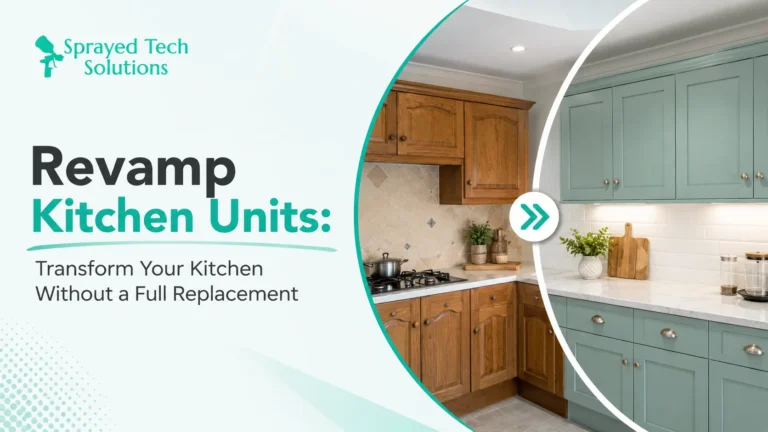
If your kitchen looks dated, you don’t necessarily need to replace the entire thing. Revamping kitchen units can transform the appearance of your kitchen without the cost and disruption of a complete refit.
Your existing cabinets might be perfectly usable, even if their colour, finish or style no longer suits your home. With professional kitchen spraying, updated handles and a few carefully chosen improvements, you can give your kitchen a fresh, modern appearance while keeping the units that still work.
At Sprayed Tech Solutions, we understand that the decision isn’t always about choosing between an old kitchen and a brand-new one. Sometimes, it’s about recognising the value in what you already have and finding the right way to bring it back to life.
In this guide, we’ll explain how kitchen unit refurbishment works, how to decide whether your cabinets are worth keeping, which finishes to consider, and when professional kitchen spraying could be the right choice.
Should You Revamp Your Kitchen or Replace It?

Before deciding to replace your kitchen, take a closer look at the cabinets you already have. Their condition matters far more than their age or appearance alone.
Check the quality of your existing cabinets first
One of the first things we recommend is checking what you’re actually replacing.
If your kitchen has solid timber cabinets, particularly oak, and the structure remains sound, you may already have high-quality cabinetry worth preserving. Replacing it simply because the colour looks dated could mean removing perfectly serviceable units that have plenty of life left in them.
We’ve seen homeowners consider removing solid wood kitchens when the main problem is the appearance of the doors and surfaces. In some cases, replacing those cabinets with lower-cost alternatives may not offer the same underlying quality.
The important question is whether the kitchen genuinely needs replacing or whether it simply needs a new finish.
If the cabinet structure is still in good condition, professional respraying can give it a fresh appearance while allowing you to retain the existing cabinetry.
Of course, not every kitchen is suitable for refurbishment. Swollen panels, serious water damage, deteriorating cabinet boxes or a fundamentally impractical layout may make replacement the more sensible option.
Start by assessing the condition of the kitchen before committing to either approach.
Can a revamped kitchen look as good as a new one?
One common misconception is that a refurbished kitchen can never look as good as a newly installed one.
In reality, the result depends on the condition of the existing units, the preparation work and the finishing process.
We’ve worked with homeowners who initially believed that a complete refit was the only way to achieve a modern kitchen. Once the refurbishment is finished, their reaction can be one of genuine surprise at how different the room looks.
One of the comments that captures this reaction is:
“I honestly can’t tell it’s not a new kitchen — nobody would know unless I told them.”
That kind of feedback reflects what a well-executed refurbishment can achieve. A professional spray finish can give suitable cabinet doors and panels a smooth, consistent appearance without automatically replacing the entire kitchen.
The advantage is that you can retain a layout you already like while spending your budget on the elements that need attention.
What Does It Mean to Revamp Kitchen Units?
To revamp kitchen units means updating the appearance of your existing cabinets rather than automatically removing and replacing them.
Depending on their condition, the work might include:
- Respraying suitable cabinet doors and drawer fronts.
- Changing the cabinet colour.
- Refreshing end panels, plinths and other visible components.
- Updating handles and hinges.
- Replacing doors that are too damaged or unsuitable for refinishing.
- Improving lighting, worktops or splashbacks where needed.
The right approach depends on the condition of the kitchen and the result you want to achieve.
For example, if the cabinet carcasses are structurally sound but the doors have an outdated oak-effect finish, professional respraying may be worth considering. If the doors are damaged beyond repair, replacing them while retaining the existing cabinet boxes could be a better option.
A good refurbishment begins with an assessment, not simply a choice of colour.
Brush and Roller vs Professional Kitchen Spraying
Choosing the right application method can make a significant difference to the appearance of your finished kitchen.
Both DIY painting and professional spraying have their place. The best option depends on your budget, the condition of the cabinets and the finish you expect.
DIY painting with a brush and roller
Painting your own kitchen units can be a practical option if you have the time, patience and confidence to complete the preparation and application yourself.
However, kitchen cabinets need more preparation than ordinary walls. Grease, cooking residue and cleaning products can interfere with adhesion, while an unsuitable primer or coating may lead to peeling or premature wear.
Brush marks, roller texture and uneven coverage can also be difficult to avoid, especially across large cabinet doors.
DIY painting may suit homeowners working to a tight budget, but the finished result depends heavily on the preparation, products and application technique.
Professional kitchen spraying
Professional kitchen spraying aims to achieve a smooth, consistent finish with no minimal visible brush or roller marks.
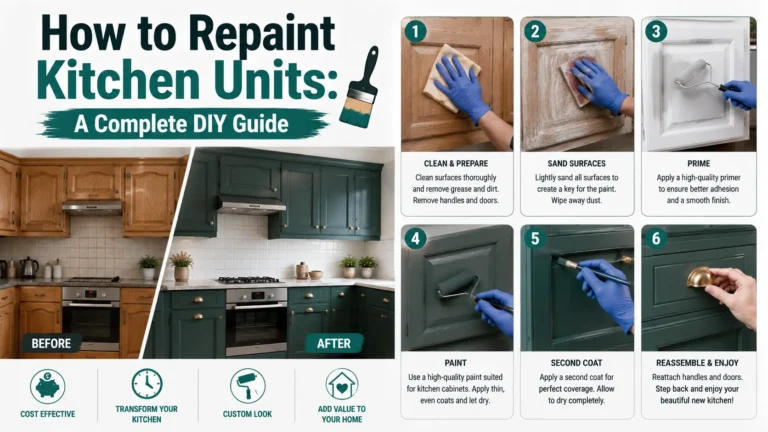
The process typically involves removing or preparing suitable components, thoroughly cleaning the surfaces, preparing the existing finish, applying a compatible primer where required and using an appropriate coating system.
With suitable materials and controlled application, spraying can create a finish with a more uniform appearance across cabinet doors, drawer fronts and panels.
This is particularly useful when you want to change the overall style of your kitchen without replacing the underlying units.
For homeowners looking for a smooth, factory-style finish, professional kitchen spraying is an option worth considering. The quality of the preparation and the coating system matters just as much as the final application.
Why Kitchen Unit Refurbishment Is Becoming Popular

Replacing a kitchen can involve far more than buying new cabinets. Installation, worktops, plumbing, electrical work, flooring and decorating can all add to the overall cost and disruption.
Refurbishment takes a more targeted approach.
If your existing layout works and your cabinets remain structurally sound, you may be able to achieve a significant visual change without undertaking a complete renovation.
Save money by keeping what still works
A kitchen contains many individual components, and not all of them need replacing at the same time.
If the cabinet carcasses are in good condition, you might be able to retain them and focus your budget on respraying the doors, updating the handles and refreshing other visible finishes.
The final cost will depend on the size and condition of your kitchen, the number of components involved and the specification of the work.
Refurbishment isn’t automatically the cheapest option in every situation, but it gives you the opportunity to compare a targeted improvement against the cost of replacing everything.
Reduce unnecessary disruption
A complete kitchen replacement can involve removing existing units and coordinating several trades.
A targeted refurbishment may avoid much of that work when the layout, plumbing and electrical arrangements can remain unchanged.
The exact disruption depends on the project and the way the work is carried out. However, keeping suitable existing cabinetry can make a kitchen update more straightforward than starting again from scratch.
Keep the kitchen you already like
Sometimes the layout is right, the storage works and the appliances are in the correct places. The only problem is that the cabinets look tired.
In that situation, a new colour and finish may be enough to change the character of the room.
Rather than redesigning a kitchen that already works, you can focus on the areas that make it look dated.
Signs Your Kitchen Units Are Suitable for Refurbishment
Before choosing a finish, check whether your existing cabinets are suitable for the work.
Your kitchen may be a good candidate if:
- The cabinet carcasses are solid and stable.
- The doors are structurally sound.
- The hinges and drawer runners work reasonably well.
- The layout suits your household.
- The main problems are scratches, faded finishes or outdated colours.
- The surrounding worktops and appliances remain usable.
These signs suggest that a cosmetic refurbishment may be worth investigating.
When replacement may be the better choice
Some problems cannot be solved by changing the finish.
Swollen MDF, severe water damage, broken cabinet boxes and extensive deterioration can affect the integrity of the units. Similarly, if your kitchen lacks essential storage or the layout makes everyday use difficult, a complete redesign may offer better long-term value.
Pay particular attention to areas around sinks and dishwashers, where repeated moisture exposure can damage cabinet materials.
A professional assessment can help determine whether a surface needs preparation and refinishing or whether the underlying material is no longer suitable.
Kitchen Cupboard Refurbishment Options
There are several ways to update a kitchen without automatically replacing every unit.
The most suitable option depends on your cabinet material, the condition of the existing surfaces and the degree of change you want.
1. Repainting and respraying kitchen units
Repainting and respraying can transform suitable cabinet doors and panels by changing their colour and finish.
However, the quality of the result depends on more than the paint itself.
Kitchen cabinets collect grease and residue through everyday use. Applying a coating without removing those contaminants or preparing the surface properly can compromise the finished result.
Professional refurbishment typically involves cleaning and degreasing, suitable surface preparation, compatible primers where required and a coating system selected for the existing material.
The aim is to achieve an even finish that complements the rest of the kitchen.
2. Replacing kitchen cupboard doors
If your existing cabinet boxes are in good condition but the doors are damaged or unsuitable for refinishing, replacement doors may be worth considering.
This approach allows you to change the visible style of your kitchen while retaining much of the existing structure.
For example, you could replace dated raised-panel doors with a simpler Shaker or slab design.
Accurate measurements and matching the surrounding panels, plinths and trims are important to ensure the finished kitchen looks cohesive.
3. Updating handles and hinges
New handles can make a noticeable difference without requiring major work.
Black, brushed-metal and other contemporary finishes can complement a new cabinet colour, while replacing worn hinges may improve how doors open and close.
Check the existing fittings before choosing replacements, particularly if you want to retain the current doors.
4. Refreshing worktops, splashbacks and lighting
Once the cabinet finish has changed, older worktops or splashbacks may become more noticeable.
You don’t necessarily need to replace them, but it’s worth assessing whether they complement the new colour scheme.
Under-cabinet lighting, updated taps and improved internal storage can also help make the kitchen feel more modern and practical.
The key is to choose upgrades that add value rather than replacing components simply because the cabinets are being refurbished.
Choosing the Right Colour for Your Kitchen Units
Colour has a major influence on how a kitchen feels because cabinets occupy so much visual space.
Before selecting a shade, consider your worktops, flooring, splashbacks, natural light and the overall style of your home.
Popular colour directions
Sage and olive green: Muted greens can introduce a natural feel and work well with timber details and neutral surfaces.
Navy and deep blue: Darker blues can create contrast and a more dramatic appearance, particularly when paired with lighter worktops.
Warm neutrals: Cream, beige and warm off-white shades can create a softer alternative to bright white.
Contemporary grey: Depending on the shade and lighting, grey can provide a restrained, modern look.
Two-tone cabinets: Using one colour for the main units and another for an island can add contrast without making the entire room feel busy.
Trends can provide inspiration, but the best colour is one that works with your home and that you’re happy to live with over time.
How Professional Kitchen Unit Respraying Works
Professional kitchen spraying involves several stages, and preparation is a crucial part of the process.
Although the finished colour gets most of the attention, the work carried out beforehand can have a significant influence on the quality of the result.
Step 1: Assess the existing cabinets
The doors, drawer fronts, panels and other components need to be checked for damage, swelling, loose finishes and other problems.
This helps establish whether the existing surfaces are suitable for refurbishment and whether repairs are required before spraying.
Step 2: Remove and label suitable components
Where appropriate, doors and drawer fronts are removed so they can be prepared and finished separately.
Labelling components and keeping track of the fittings helps make reinstallation more straightforward.
Step 3: Clean and prepare the surfaces
Kitchen cabinets need to be thoroughly cleaned and degreased before the coating system is applied.
The preparation method depends on the material and existing finish. Sanding or other surface preparation may be required to create a suitable base.
This stage should never be rushed simply to save time.
Step 4: Apply a suitable primer and coating system
The primer and coating must be compatible with the cabinet material and the intended use.
Different surfaces can require different products and preparation methods, so the process should be selected according to the specific kitchen rather than applying the same approach to every job.
Step 5: Apply the spray finish
Once the surfaces have been properly prepared, the selected coating system can be applied to achieve consistent coverage.
Controlled application helps create the smooth, uniform appearance associated with a professional spray finish.
Step 6: Allow the coating to cure
A coating that feels dry to the touch may not have fully cured.
The required curing time depends on the products used and the conditions in which they are applied. Doors and other components should be handled and returned to everyday use according to the coating manufacturer’s instructions.
Rushing this stage can affect the finish.
Step 7: Reinstall and check the components
Once the finish is ready for installation, the components can be refitted and adjusted.
Doors should align correctly, hinges should operate properly and handles, panels and trims should work together to create a consistent appearance.
These finishing details help complete the transformation.
How Much Does It Cost to Revamp Kitchen Units?

The cost of revamping kitchen units depends on the number of doors, the condition of the surfaces, the preparation required and the finish you choose.
Rather than comparing prices without considering what’s included, ask for a quotation that explains the scope of the work.
Check whether the price includes:
- Cleaning and surface preparation.
- Primer and the specified coating system.
- Doors, drawer fronts and end panels.
- Removal and refitting, where applicable.
- Handles, hinges and other fittings.
- Repairs and any additional finishing work.
A detailed quotation makes it easier to compare providers fairly and understand what you’re paying for.
The best option is not necessarily the cheapest quote. Preparation, materials, workmanship and the condition of the existing kitchen all influence the final result.
Revamping Kitchen Units vs Installing a New Kitchen
The right choice depends on whether your kitchen mainly needs a cosmetic update or a more fundamental improvement.
| Consideration | Kitchen refurbishment | Full kitchen replacement |
|---|---|---|
| Existing cabinets | Retained if suitable | Usually replaced |
| Layout | Often remains unchanged | Can be redesigned |
| Main objective | Refresh appearance and selected features | Change appearance and potentially functionality |
| Building work | May be limited, depending on scope | May involve more trades and alterations |
| Suitability | Sound cabinets and a workable layout | Major damage or significant layout changes |
If your cabinets are structurally sound and the layout works, refurbishment deserves serious consideration.
If the existing kitchen has extensive damage, insufficient storage or a layout that doesn’t meet your needs, replacement may be more appropriate.
The important thing is to base the decision on the condition and functionality of your kitchen rather than assuming that a new installation is always necessary.
How Long Does Kitchen Cupboard Refurbishment Take?
The timescale depends on the size of the kitchen, the number of components, the preparation required and the coating system being used.
A targeted refurbishment can avoid some of the demolition and installation work involved in a full kitchen replacement. However, the preparation, application, curing and refitting stages still need adequate time.
Before work begins, ask your chosen provider for an estimated schedule and clarify which parts of the kitchen will be unavailable during the project.
It is also worth asking whether doors will be finished on-site or removed for work elsewhere, as this can affect how you use the kitchen during the refurbishment.
A realistic schedule is preferable to rushing the work and compromising the finish.
Common Mistakes to Avoid When Revamping Kitchen Units
Skipping preparation
Applying paint over grease, dirt, or an unsuitable existing coating can compromise adhesion and the final appearance.
Thorough cleaning and appropriate surface preparation are essential.
Choosing the wrong products
Water-based systems are safe, and 2K solvent-based should not be used inside your home, as the majority carry serious health risks.
Ignoring structural damage
A fresh finish cannot fix swollen panels, serious water damage, or deteriorating cabinet boxes. Address underlying problems before deciding whether to refurbish.
Forgetting the surrounding details
New cabinet colours can make worn handles, damaged trims or mismatched panels more noticeable.
Assess the kitchen as a whole and decide which additional improvements are genuinely worthwhile.
Rushing the curing process
Dry to the touch does not necessarily mean fully cured. Follow the manufacturer’s instructions before reinstalling, cleaning or using the finished components normally.
Choosing a contractor on price alone
Ask about preparation, coating systems, repairs, installation and the scope of the quotation. A clear explanation of the process can tell you more than a low headline price.
Is Kitchen Unit Refurbishment Worth It?
Kitchen unit refurbishment can be a sensible investment when the existing cabinets are structurally sound and the layout already meets your needs.
Instead of replacing components that remain usable, you can concentrate on the finish, colour and details that make the biggest difference to the room.
Professional kitchen spraying is particularly worth considering when you want a consistent, modern appearance without automatically committing to a complete refit.
However, refurbishment isn’t the right solution for every kitchen. Serious structural damage, persistent moisture problems or a fundamentally unsuitable layout may justify replacement.
Start by assessing what you already have, then compare the options based on your budget, requirements and expectations for the finished result.
Why Consider Sprayed Tech Solutions for Your Kitchen?
If your existing kitchen is in good condition but the cabinets look dated, professional spraying may offer a way to transform its appearance without replacing everything.
At Sprayed Tech Solutions, our approach focuses on the preparation, coating process and finishing details needed to give suitable kitchen units a fresh, consistent appearance.
Before committing to a refurbishment, consider the condition of your cabinets, the finish you want and the scope of work involved.
Thinking about refreshing your kitchen? Contact Sprayed Tech Solutions to discuss your kitchen spraying project and find out whether your existing units are suitable for refurbishment.
Frequently Asked Questions
1. Can I revamp my kitchen units without replacing them?
Yes. If your existing cabinets are structurally sound, they may be suitable for professional respraying or other refurbishment work. You can also update handles and replace selected doors or panels while retaining the existing layout.
2. Is it cheaper to revamp kitchen units than install a new kitchen?
It can be, particularly when the existing cabinets and layout are still suitable. The final cost depends on the condition of the kitchen, the amount of preparation required and the work included in the refurbishment.
Compare detailed quotations before deciding.
3. How long does a professionally resprayed kitchen finish last?
The lifespan depends on the cabinet material, preparation, coating system, curing and everyday use. Ask your chosen provider about the products and preparation process they use, any applicable workmanship warranty and how the finished surfaces should be maintained.
4. Can kitchen cupboard doors be resprayed in a different colour?
Yes, provided the existing doors are suitable for the proposed coating system. Professional preparation and compatible products are important for achieving a consistent finish.
5. Can solid oak kitchen units be resprayed?
Solid oak units may be suitable for respraying if they are structurally sound and can be properly prepared. The preparation and coating approach should take account of the existing finish and the characteristics of the timber.
6. Is professional kitchen spraying better than DIY painting?
They serve different needs. DIY painting can suit homeowners with a limited budget and the time to complete the work themselves. Professional spraying can provide a smoother, more uniform finish when the preparation and application are carried out correctly.
The right choice depends on your expectations, budget and the condition of your kitchen.
7. Do I need to replace my kitchen worktops as well?
Not necessarily. If your worktops remain in good condition and complement the new cabinet colour, you may be able to keep them. Assess the worktops, splashback, handles and other visible details before deciding which additional upgrades are needed.
8. How do I get a quote for kitchen spraying?
Start by discussing the size and condition of your kitchen, the materials involved and the finish you want. Photographs can help with an initial discussion, although a more detailed assessment may be needed before a final quotation can be provided.
Contact Sprayed Tech Solutions to discuss your requirements and the options available for your kitchen.