Skip to content
Choosing a new window colour can completely change the appearance of a property. While white uPVC windows remain a familiar choice, modern homeowners now have a much wider selection, including anthracite grey, agate grey, black, cream, Chartwell green, golden oak, Irish oak, rosewood and several other woodgrain finishes. Current UK window suppliers offer dozens of colour and finish combinations, and some manufacturers provide more than 40 foil options across smooth, textured and wood-effect finishes.
That variety is useful, but it can also make choosing a colour surprisingly difficult. A colour that looks fantastic on a showroom sample might appear completely different when installed against red brick, rendered walls or stonework. The amount of natural light, roof colour, front door, fascia, soffits and neighbouring properties can all influence how a window colour looks.
This uPVC window colour chart guide explains the most popular options, the difference between smooth and woodgrain finishes, how dual-colour windows work, why RAL references should be treated carefully, and how to choose a colour that suits your property rather than simply following a passing trend.
What Is a uPVC Window Colour Chart?
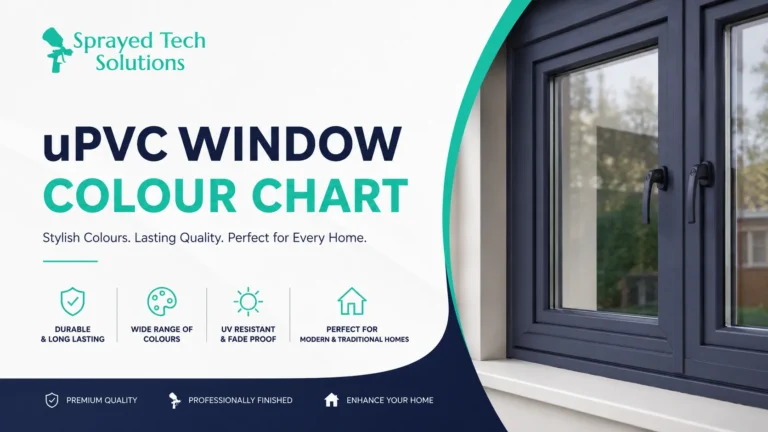
A uPVC window colour chart is essentially a visual reference showing the colours and finishes available for uPVC window frames. Depending on the manufacturer or installer, a colour chart can contain standard white finishes, coloured foils, woodgrain effects, textured surfaces and dual-colour combinations. It is important to understand that there is not one universal uPVC colour chart used by every window manufacturer. Different profile systems and suppliers can have different colours, names and finishes.
For example, one supplier might describe a grey as Anthracite Grey, while another may use a different commercial name or offer a slightly different shade. Some manufacturers provide RAL or BS references as approximate comparisons, but these should not automatically be treated as exact matches. Window Widgets specifically warns that listed RAL and BS references for certain foils are recommended matches rather than guaranteed exact colour matches.
That is why looking at a physical sample is often much more useful than choosing a colour from a computer screen. Your monitor settings, lighting and surrounding colours can alter the appearance considerably. If you’re ordering several windows, requesting actual samples before committing can help prevent an expensive colour mismatch.
How uPVC Window Colours Are Produced
Coloured uPVC frames are commonly finished using decorative foils applied during manufacturing. These foils can provide solid colours, subtle textures or realistic woodgrain appearances. Modern systems have become considerably more sophisticated, with manufacturers offering finishes designed to replicate the visual and tactile characteristics of timber or aluminium.
The finish you choose can therefore influence more than just colour. A smooth anthracite frame can create a clean contemporary appearance, while an anthracite woodgrain frame may introduce more texture and visual depth. Similarly, a golden oak finish can give a modern uPVC window a traditional timber-inspired appearance without requiring the same maintenance approach as natural timber.
Most Popular uPVC Window Colours

The popularity of coloured uPVC windows has grown significantly because homeowners are no longer restricted to basic white frames. A recent UK industry guide identifies Anthracite Grey as the most requested non-white finish, while white continues to be a common choice across Britain.
The best colour, however, depends on your property. A contemporary rendered house may suit a dark grey frame, whereas a period cottage could look more natural with cream or a woodgrain finish. The goal should not simply be to select the colour that appears most frequently on social media or in new-build developments. Instead, consider how the frame interacts with the building’s architecture.
Here are several colours commonly found in current UK uPVC window ranges:
| uPVC Window Colour | Typical Style | Suitable Property |
| White | Classic and clean | Traditional and modern |
| Anthracite Grey | Contemporary | Modern homes and extensions |
| Agate Grey | Soft and understated | Modern and transitional homes |
| Black | Bold and dramatic | Contemporary and industrial properties |
| Cream | Warm and traditional | Period and country homes |
| Chartwell Green | Heritage-inspired | Cottages and traditional homes |
| Golden Oak | Timber effect | Traditional properties |
| Irish Oak | Natural wood effect | Traditional and character homes |
| Rosewood | Dark timber effect | Period-style properties |
These colours are examples rather than a universal industry-standard chart, because availability varies between manufacturers.
White uPVC Windows
White uPVC windows are the classic option for a reason. They provide a bright, neutral appearance that can work with almost any exterior colour scheme. White frames can also make smaller windows appear visually lighter and can complement white rendering, light brickwork and many traditional property styles.
A major advantage of white is flexibility. If you later repaint the exterior walls, replace the front door or alter the interior décor, white windows are unlikely to clash with the new scheme. They can also work well when a homeowner wants the architectural details of a property to remain understated rather than making the windows a major visual feature.
Modern suppliers may offer more than one white finish, so even the word “white” does not necessarily describe a single appearance. Some ranges include smooth white, white woodgrain and heritage-style finishes. Before ordering, ask the supplier which specific white profile and finish is being quoted.
Anthracite Grey uPVC Windows
Anthracite Grey uPVC windows have become one of the strongest contemporary choices in the UK. The shade is commonly associated with RAL 7016, although the actual appearance can vary depending on the particular foil or profile system. Current suppliers describe anthracite grey as a leading modern finish, and it is widely available in both smooth and woodgrain styles.
Anthracite works particularly well with modern brick, white render, pale stone and minimalist exterior designs. It creates stronger definition around the glazing than white, giving the building a more architectural appearance. It can also coordinate nicely with a dark front door, garage door, fascia or external lighting.
However, dark grey is not automatically right for every house. On a very traditional property, especially one with established timber detailing, an intense modern grey may look less natural. The safest approach is to view a sample against your actual brickwork and consider the colour at different times of day.
Agate Grey uPVC Windows
Agate Grey offers a softer alternative to anthracite. Instead of creating a strong dark contrast, it can provide a more restrained contemporary finish. Some UK window suppliers offer Agate Grey in woodgrain finishes, demonstrating how the colour can be adapted for both modern and more traditional-looking windows.
This makes Agate Grey useful when you want coloured frames but do not want the visual weight of black or anthracite. It can work especially well with light render, neutral brick and muted exterior palettes.
If you’re deciding between several grey shades, place samples next to your actual exterior materials. Grey is particularly sensitive to surrounding colours. A shade that appears warm beside cream walls can look cooler beside white render, so viewing it in context is essential.
Black uPVC Windows
Black uPVC windows create a bold, high-contrast appearance. They can suit contemporary properties, industrial-inspired designs and homes where the windows are intended to become a noticeable architectural feature. Black frames also pair naturally with other dark exterior elements, such as black doors, gutters and modern lighting.
A black woodgrain finish provides a slightly different appearance from smooth black. The texture can soften the uniformity of the colour and create a more traditional impression.
The key is balance. If every exterior element is dark, the property can potentially lose visual contrast. Pairing black frames with lighter brick, render, stone or timber details can create a much more balanced result.
Woodgrain uPVC Window Colours
Woodgrain finishes are designed to reproduce the appearance of timber while retaining the characteristics associated with modern uPVC window systems. They are particularly useful for homeowners who want a traditional aesthetic without choosing plain white frames.
Common wood-effect options include Golden Oak, Irish Oak, Rosewood, dark woodgrain and cream woodgrain. Current UK window ranges also offer black and Chartwell Green in woodgrain styles.
Woodgrain colours can be especially effective on cottages, Victorian-style properties, country homes and buildings where plain contemporary frames might appear visually out of place.
Golden Oak and Irish Oak
Golden Oak and Irish Oak are two familiar timber-effect finishes. Golden Oak generally provides a warmer and richer appearance, while Irish Oak can offer a lighter timber-inspired look. The exact shade varies by manufacturer, so these names should be treated as finish names rather than precise universal colour specifications.
These colours are useful when you want the warmth of timber without installing natural timber frames. They can complement brickwork, stone and other traditional building materials particularly well.
Before selecting an oak finish, compare it with your existing doors and other wood-effect elements. Matching does not necessarily mean finding an identical colour, but the tones should feel compatible rather than competing with one another.
Rosewood and Dark Woodgrain
Rosewood uPVC windows provide a deeper, richer timber appearance. They can be suitable for traditional properties or homes where darker wood tones are already present.
Dark woodgrain is another option for homeowners who want character without choosing a solid black frame. The texture gives the frame a more natural appearance and can work particularly well on properties with traditional architectural details.
Modern window suppliers continue to offer these finishes alongside contemporary colours, demonstrating that coloured uPVC is not simply about grey and black.
Green and Cream uPVC Window Colours
If you’re looking beyond the usual white and grey options, Chartwell Green and cream uPVC windows are worth considering. Chartwell Green has a soft, heritage-inspired character that can complement cottages, country properties and traditional façades. Cream can provide warmth without the stronger timber effect of oak or rosewood.
These colours can be especially effective where a property already contains natural landscaping, stone walls, timber features or muted exterior materials. Rather than creating sharp contrast, they tend to blend into a softer overall colour palette.
Anglian Home Improvements currently lists options including Golden Oak, dark woodgrain, white woodgrain, dual anthracite grey and dual cream within its coloured window range, illustrating the breadth of combinations available to homeowners.
Dual-Colour uPVC Windows
One of the most useful developments in coloured uPVC windows is the dual-colour option. Instead of having the same colour on both sides, you can choose one finish externally and another internally, depending on what the manufacturer and profile system allow.
For example, a homeowner might choose anthracite grey externally to create a modern façade while retaining white internally for a lighter room appearance. This can solve a common design problem: the colour that looks ideal outside isn’t necessarily the colour you want to see around your interior décor.
Availability varies by supplier and window system, so dual-colour should always be confirmed before ordering. Current UK suppliers explicitly advertise dual finishes such as dual anthracite grey and dual cream.
RAL Colours vs uPVC Foil Colours
A common mistake is assuming that choosing RAL 7016, for example, guarantees that your uPVC window will look exactly like a RAL 7016 painted metal surface. It does not necessarily work that way.
RAL references can be useful for identifying a general colour family, but decorative uPVC foils are manufactured finishes with their own characteristics. Window Widgets explains that its listed RAL or BS references are recommended matches and may not be exact.
This distinction matters when you’re coordinating windows with aluminium doors, painted garage doors, composite doors or other exterior products. Always request physical samples where an exact visual match is important.
How to Choose the Best uPVC Window Colour
Choosing the right colour starts with the property rather than the window brochure. Look at your brickwork, render, roof, doors, fascia, soffits, guttering and existing exterior details. Then decide whether you want your windows to blend into that palette or provide contrast.
A useful approach is to narrow the choice to three categories: neutral, contemporary or heritage. White and soft grey fall comfortably into neutral territory. Anthracite and black create a contemporary appearance. Oak, rosewood, cream and Chartwell Green generally provide a more traditional or heritage-inspired feel.
Do not make the final decision from a tiny online colour square. A full-size frame sample or physical swatch is much more reliable because colour perception changes with scale and lighting.
Matching Your Home’s Exterior
If your house has red brick, darker grey or black can create a strong modern contrast, while oak-effect frames can reinforce a traditional aesthetic. With white render, almost any colour can work, but darker frames will create more visual definition.
For stone properties, softer colours such as cream, agate grey or certain woodgrain finishes may integrate more naturally. On a modern extension, anthracite grey can create a crisp transition between the glazing and the surrounding walls.
Think about the whole façade, not just the windows. A colour can look excellent on a single frame but feel excessive when repeated across a large elevation.
Do Dark uPVC Windows Fade?
The durability of a coloured uPVC window depends on the profile, foil, manufacturing process and product quality. Modern decorative foils are designed for exterior applications, but homeowners should still ask suppliers about the specific finish’s warranty, UV resistance and expected performance.
It is therefore misleading to assume that every dark uPVC frame will behave identically. Different manufacturers use different technologies and materials. Aluplast, for example, describes its modern foil ranges as offering a broad selection of smooth, textured and woodgrain finishes.
When buying coloured windows, ask about the manufacturer’s guarantee and the specific colour system being supplied. A reputable installer should be able to explain the finish rather than simply promising that it “won’t fade.”
Are Coloured uPVC Windows More Expensive?
The price depends on the colour, profile, finish, window style, glazing specification and supplier. Standard white uPVC is often the simplest option, while specialist colours, woodgrain finishes and dual-colour configurations can increase the price.
However, there is no universal surcharge that applies to every coloured window. Some colours are standard stock options, while others may be special-order finishes. Current suppliers demonstrate significant differences in available colour ranges, with some advertising around 30 standard colours and others offering more than 40 foil options.
Instead of asking only, “How much extra is the colour?” compare the complete quotation. Look at the window profile, glazing, hardware, installation, guarantee and finish. A cheaper coloured window isn’t necessarily better value if it comes with a weaker specification.
uPVC Window Colours for Modern Homes
Modern homes often suit clean, understated colours. Anthracite grey, black, agate grey and smooth white are strong options because they can complement minimalist architecture without adding unnecessary visual detail.
Anthracite grey is particularly flexible because it can appear dramatic against white render but relatively subtle against darker brick. Black creates a stronger statement, making it useful where the windows are intended to act as a defining architectural feature.
For contemporary extensions, consider whether the window colour should match the existing house or deliberately distinguish the new structure. Matching usually creates a cohesive appearance, while contrast can make an extension feel like a clearly defined modern addition.
uPVC Window Colours for Traditional Homes
Traditional properties require a slightly different approach. Woodgrain finishes such as Irish Oak, Golden Oak and Rosewood, along with cream and Chartwell Green, can complement older architectural styles.
This does not mean a period property must have wood-effect windows. White can still be appropriate, particularly where it matches existing frames or the property’s established colour scheme. The important thing is to respect the architectural character rather than choosing a colour simply because it is currently fashionable.
For listed buildings or conservation areas, planning and conservation requirements may also influence your choices. Before ordering replacement windows for a protected property, check the relevant local requirements and discuss suitable materials and colours with the appropriate authority or a specialist installer.
Best uPVC Window Colour for Kerb Appeal
There is no single best uPVC window colour for kerb appeal because kerb appeal depends on the complete exterior design. A dark frame can dramatically improve a modern home, while a soft cream or woodgrain finish may enhance a traditional property.
Consider the relationship between your windows and front door first. If the door is already a strong focal point, a neutral window colour may prevent the façade from becoming visually crowded. If the front elevation lacks contrast, dark windows could add definition.
You should also consider longevity. Trends change. A colour that dominates new-build developments today may eventually become less fashionable. Choosing a shade that works with your home’s architecture rather than a temporary trend is usually a safer long-term decision.
Can Existing uPVC Windows Be Recoloured?
If your existing uPVC windows are structurally sound, recolouring may be an alternative to complete replacement. Specialist uPVC spraying and frame restoration services can change the appearance of existing window frames using coatings designed for suitable exterior substrates.
This can be particularly attractive when homeowners like the existing glazing and frame configuration but dislike the colour. Instead of replacing an entire window system, a professional coating service may transform the visible finish.
However, the suitability depends on the condition and material of the existing frames. Proper preparation, cleaning, adhesion and coating application are critical. If you’re considering this route, ask the contractor about their preparation process, coating system, guarantees and examples of completed uPVC projects.
How to Compare uPVC Window Colour Samples
Always compare samples outside when possible. Natural daylight can reveal undertones that are difficult to see under showroom lighting. Hold the sample next to the brickwork, render, stone, door and other exterior elements.
Try to view the sample at different times of the day. Morning sunlight, cloudy conditions and evening light can all change how a colour appears. A dark grey that looks elegant in bright sunlight can appear considerably deeper on an overcast day.
Also compare smooth versus woodgrain finishes. Two frames with the same basic colour can look completely different because texture changes the way light reflects from the surface.
Finally, ask your installer for the exact manufacturer, profile system, colour name and finish. Do not rely solely on a generic description such as “grey uPVC.” The precise product specification matters.
Conclusion
A modern uPVC window colour chart offers far more choice than the traditional white-versus-brown decision homeowners once faced. Today’s ranges can include white, anthracite grey, agate grey, black, cream, Chartwell Green, Golden Oak, Irish Oak, Rosewood and numerous other smooth and woodgrain finishes. Manufacturers such as Aluplast advertise more than 40 foil options across their ranges, while other UK suppliers offer around 30 standard colours or additional special-order options.
The right choice depends on your property’s architecture, exterior materials, personal taste and long-term plans. Anthracite grey is an excellent contemporary option, while white remains versatile and timeless. Woodgrain finishes can work beautifully on traditional homes, and dual-colour windows provide additional flexibility when you want a modern exterior but a lighter interior.
Most importantly, don’t choose your final colour from a screen alone. Get physical samples, compare them against your actual property and confirm the exact finish with your window supplier. A little extra time at the selection stage can make the difference between windows that simply do their job and windows that genuinely improve the appearance of your home.
FAQs
1. What is the most popular uPVC window colour?
Anthracite Grey is currently one of the most popular non-white uPVC window colours in the UK. White remains a very common choice, while grey, black and woodgrain finishes have become increasingly available.
2. What colours are available for uPVC windows?
Common options include white, Anthracite Grey, Agate Grey, black, cream, Chartwell Green, Golden Oak, Irish Oak, Rosewood and various other woodgrain and textured finishes. Exact availability depends on the manufacturer and profile system.
3. Is Anthracite Grey the same as RAL 7016?
Anthracite Grey is commonly associated with RAL 7016, but a uPVC foil should not automatically be assumed to be an exact RAL 7016 match. Manufacturers can use their own foil formulations and finishes, so physical samples are recommended when matching other products.
4. Can uPVC windows have different colours inside and outside?
Yes, some manufacturers offer dual-colour uPVC windows, allowing different finishes on the interior and exterior. Availability depends on the particular window system and supplier.
5. Can you change the colour of existing uPVC windows?
Yes, suitable existing uPVC frames can potentially be professionally recoloured using specialist coating systems. Whether recolouring is appropriate depends on the condition of the frames, their existing finish and the preparation and coating process used by the contractor.