Skip to content
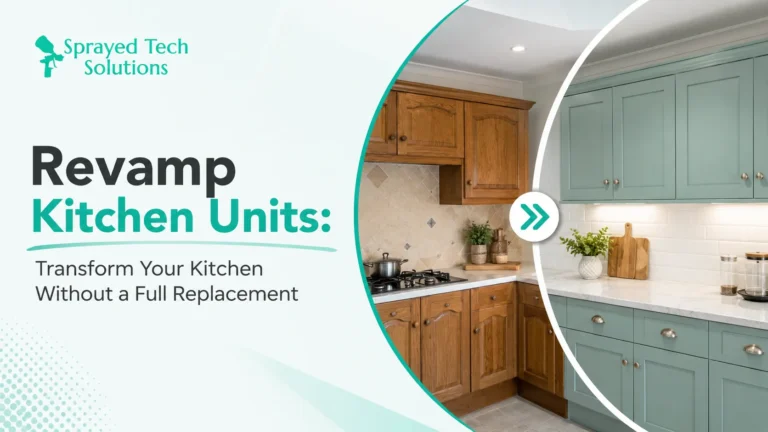
If your kitchen looks tired, dated or simply no longer matches your style, you do not necessarily need to rip everything out and start again. Revamping kitchen units can give an existing kitchen a completely different appearance while allowing you to keep much of what already works. Instead of treating an older kitchen as something that must be discarded, think of the cabinets as a blank canvas. A professional refurbishment can change the colour, finish and overall character of the room without automatically requiring a new layout, new cabinets or weeks of major building work.
This approach has become particularly attractive to homeowners who want a noticeable transformation while keeping control of their renovation budget. Current UK refurbishment guidance also recognises repainting or replacing cupboard doors as common ways to update a kitchen without committing to a complete refit.
The real appeal is flexibility. Perhaps your existing units are structurally sound but have an old-fashioned oak effect, faded laminate, chipped paint or a colour that no longer suits your home. Perhaps the handles feel dated, while the worktops and appliances are still perfectly usable. In situations like these, kitchen cupboard refurbishment can target the parts that need attention rather than forcing you to replace everything.
You can change cabinet colours, update handles, replace selected doors, improve lighting and refresh surrounding finishes while preserving a familiar layout. That means less waste, less disruption and potentially a much faster route to a kitchen that feels new. The trick is knowing which elements are worth keeping, which need refurbishing and where replacement actually makes sense.
What Does It Mean to Revamp Kitchen Units?
To revamp kitchen units means updating the appearance and, where appropriate, the functionality of existing cabinets instead of automatically replacing the entire kitchen. The exact work depends on the condition of the units and the result you want. A simple project might involve professionally repainting or respraying cabinet doors, while a more extensive refurbishment could include new doors, handles, end panels, plinths, worktops, lighting and other finishing touches.
The goal is not necessarily to make every component brand new; it is to make the existing kitchen look cohesive, modern and suited to the way you use the space. This distinction is important because many kitchens have perfectly serviceable cabinet carcasses hidden behind doors that simply look outdated.
A good refurbishment begins with an assessment rather than a colour chart. Cabinet doors need to be checked for damage, swelling, warping and deterioration, particularly around sinks and dishwashers where moisture can become an issue. Hinges and runners should also be inspected because a beautiful new finish will not compensate for doors that hang badly or drawers that constantly stick. Once the structure is considered suitable, the refurbishment can focus on visual transformation.
Professional painting and respraying can be particularly effective because the finish can be applied consistently across multiple doors, drawers and panels. The result is often a much more unified appearance than trying to disguise old cabinetry with accessories alone.
Refurbishment vs Full Kitchen Replacement
The biggest difference between refurbishment and replacement is what happens to the existing kitchen. A full replacement normally means removing the old units and installing new cabinetry, often alongside changes to worktops, plumbing, electrics, flooring and appliances.
A refurbishment takes a more selective approach. If the cabinet boxes are still solid and the layout works, there may be little reason to remove them simply because the doors or finish look dated. Checkatrade’s current UK guidance lists the average cost of a kitchen refurbishment at around £7,550, while painting kitchen cabinets averages around £951, although actual prices vary substantially according to size, preparation and specification.
That does not mean refurbishment is always the right answer. If cabinets have serious water damage, the layout is fundamentally unsuitable, storage is inadequate or major structural work is required, replacement may provide better long-term value. The sensible approach is to compare the condition of your existing kitchen with the improvements you actually need.
If the kitchen works well but looks tired, refurbishment can be a remarkably efficient middle ground. You are essentially keeping the bones of the room and giving them a new exterior, much like renovating a solid house rather than demolishing it because the paintwork is old.
Why Revamping Kitchen Units Is Becoming So Popular
Homeowners increasingly want kitchens that feel personal rather than simply following a showroom formula. Current UK kitchen research shows that functionality remains a major reason people renovate: the 2026 Houzz UK Kitchen Trends Study found that 37% of surveyed homeowners identified kitchen deterioration or dysfunction as the main driver for renovation. The same study found that 82% of renovated kitchens included speciality built-in features, showing how strongly modern homeowners value practical storage and tailored functionality. A refurbishment can work particularly well when the existing layout already provides the functionality a household needs.
There is also a practical financial argument. A new kitchen can involve cabinetry, installation, appliances, worktops, flooring, plumbing, electrical work and decorating, and costs can quickly climb as the scope expands. By contrast, a targeted kitchen cupboard refurbishment can concentrate spending on visible elements that have the greatest effect on appearance. You might keep the existing carcasses, appliances and worktops while investing in a professional cabinet finish and new hardware. This creates a useful distinction between renovating because something is genuinely broken and renovating simply because it looks old. When the problem is primarily cosmetic, a cosmetic solution can often be the smarter starting point.
Save Money Without Sacrificing Style
Saving money does not have to mean accepting a cheap-looking result. In fact, professional preparation and a high-quality finish can make a refurbished kitchen look considerably more expensive than the work involved might suggest. The cabinet doors occupy a huge amount of visual space, so changing their colour can dramatically alter how the entire room is perceived.
Add new handles, updated lighting and perhaps a refreshed splashback, and the same underlying kitchen can feel almost unrecognisable. The transformation works because the eye reads the cabinets as one large visual element rather than evaluating every component independently.
There is another advantage: you can spend your budget where it matters. Instead of replacing perfectly good cabinets, you might allocate more money toward durable finishes, specialist spraying, quality handles or a better worktop. Current UK cost guidance illustrates why this approach can make sense; Checkatrade lists painting kitchen cabinets at a lower average cost than replacing cabinets or undertaking a complete refurbishment. Of course, prices differ by kitchen, but the principle remains useful: revamp the parts that need changing rather than replacing everything automatically.
Signs Your Kitchen Units Are Ready for a Revamp
The strongest candidate for refurbishment is usually a kitchen that is structurally sound but visually dated. Look closely at your cabinet doors. Are they solid but covered in scratches, faded paint, or an old-fashioned colour? Do the hinges and drawers still work reasonably well? Is the kitchen layout comfortable, with appliances and storage positioned where you need them? If the answers are mostly yes, there is a good chance your kitchen can benefit from a targeted revamp rather than a complete replacement.
You should also consider whether the problems are cosmetic or structural. Minor chips, worn finishes and dated colours are often refurbishment issues, whereas swollen MDF, severe water damage, broken cabinet boxes and extensive deterioration may require replacement.
The area around the sink deserves particular attention because repeated moisture exposure can damage some materials beyond the point where refinishing makes sense. A professional assessment can help distinguish between a door that needs preparation and paint and a cabinet that genuinely needs replacing. Making that decision before the project starts prevents you from spending money polishing something that is fundamentally unsuitable.
Kitchen Cupboard Refurbishment Options
Kitchen cupboard refurbishment is not one single service. It can involve several different approaches depending on your budget, cabinet material and desired finish. Some homeowners want a dramatic colour change, while others simply want to restore tired surfaces. Some prefer their existing doors but want them resprayed; others want completely new door styles while retaining the underlying cabinet layout. The most suitable option depends on the condition of the cabinetry and how much visual change you want.
The key is to treat the kitchen as a complete composition. Cabinet doors, drawer fronts, end panels, plinths, handles, worktops and walls should work together rather than appearing as unrelated updates. A professional refurbishment company can help determine which components should be refinished and which should be replaced. That can prevent a common problem where brand-new doors are fitted but old end panels or mismatched trims make the overall result look unfinished.
Repainting and Respraying Kitchen Units
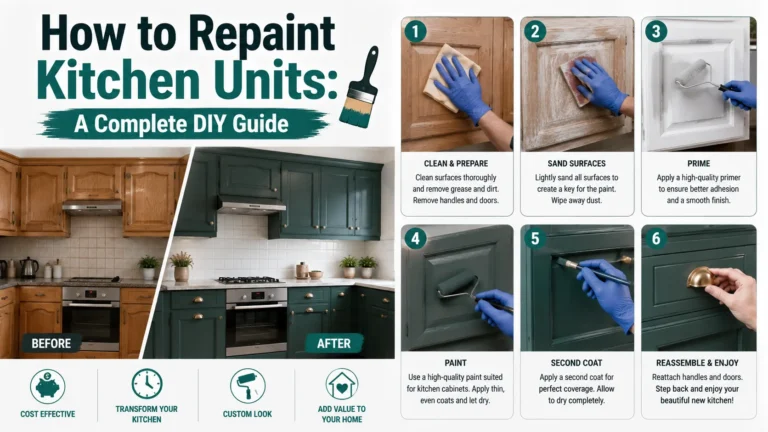
Painting or respraying is one of the most effective ways to revamp kitchen units when the existing doors are suitable for refurbishment. The difference between a professional finish and a rushed DIY job often comes down to preparation. Kitchen surfaces collect grease, cooking residue and cleaning products, so simply applying paint over the existing surface is unlikely to produce a durable, smooth result.
Professional processes typically involve thorough cleaning and degreasing, surface preparation, suitable priming and carefully controlled application. Checkatrade similarly recommends preparation as an essential part of achieving a quality cabinet-painting result.
Respraying can also create a more consistent finish across large numbers of doors and panels. Instead of seeing brush marks or uneven coverage, the objective is a smooth, uniform surface that looks deliberately manufactured. The exact coating system should be selected according to the existing cabinet material and the conditions of the kitchen. High-use areas need a finish capable of dealing with regular handling, cleaning and everyday wear. This is why professional cabinet refurbishment is more than choosing a paint colour; the preparation and coating system are fundamental to the longevity of the result.
Replacing Kitchen Cupboard Doors
If the cabinet carcasses are in good condition but the existing doors are badly damaged or unsuitable for refinishing, replacing the doors can be another effective route. You can retain much of the existing kitchen while changing the visible front-facing elements.
This is especially useful when you want to move from one design style to another, such as dated raised-panel doors to a simpler Shaker or slab appearance. Checkatrade notes that replacement doors can be installed using existing cabinetry provided the new doors are accurately measured and correctly fitted.
Door replacement also gives you an opportunity to update hinges and handles at the same time. However, accurate measurement matters, and the surrounding panels, plinths and cornices may need coordinating so that the new doors do not look like isolated additions. Current UK guidance gives a broad average of around £1,300–£2,250 for replacement kitchen doors, but actual costs vary according to the number, material and specification of doors. This makes door replacement another option worth comparing against respraying before committing to a full kitchen refit.
Can You Revamp Kitchen Units Without Changing the Layout?
Absolutely, and this is one of the strongest reasons to consider refurbishment. If your current kitchen has a practical layout, changing it may create unnecessary cost and disruption. Keeping the existing arrangement means you can often avoid moving plumbing, electrical points and appliances simply to achieve a different appearance. Instead, the visual identity of the room can be transformed through cabinetry, worktops, lighting, handles and decorative finishes.
A layout should be changed because it does not work, not simply because the kitchen is old. If you already have an efficient work triangle or workflow, sufficient storage and convenient appliance positions, preserving those features can be sensible.
Modern refurbishment can then focus on appearance and smaller functional improvements. Even relatively simple additions such as better internal storage, improved lighting or a more practical drawer configuration can make an existing kitchen feel substantially more useful without moving the main cabinetry.
Choosing the Right Colour for Your Kitchen Units
Colour is arguably the most powerful part of a cabinet refurbishment because cabinets occupy so much wall space. The right shade can make a small kitchen feel brighter, give a large kitchen more character or create contrast between an island and perimeter units. Your decision should take into account natural light, flooring, worktops, splashbacks and the style of the rest of the property rather than selecting a colour in isolation. A beautiful colour can still feel wrong if it fights with the surrounding finishes.
The good news is that 2026 kitchen trends offer plenty of room for personality. The 2026 Houzz UK study reported blue as the most popular cabinet colour among its surveyed renovated kitchens at 18%, followed by green at 17%, while grey accounted for 12% and off-white 9%. Current design coverage also points toward earthy hues, warm neutrals and softer tones for homeowners who want a look with staying power.
Popular Kitchen Cabinet Colours for 2026
Blue and green remain particularly interesting choices because they can provide colour without becoming overwhelmingly bright. Deep navy can create a sophisticated, dramatic feel, while muted sage or olive can introduce a more natural character. Warm neutrals, creamy whites and soft earthy shades remain useful where the priority is brightness and flexibility. The most important consideration is not whether a colour is technically fashionable but whether you can imagine living with it for years.
If you want something distinctive, consider using two complementary shades rather than covering every cabinet in one colour. An island can become a feature while perimeter cabinetry remains neutral, creating visual hierarchy without requiring a completely different kitchen. Alternatively, you can keep the cabinets understated and use handles, lighting, splashbacks or accessories to introduce stronger colours. This gives you more freedom to change the room later without having to refurbish the cabinetry again.
How Professional Kitchen Unit Respraying Works
A professional respray begins before the spray gun is ever used. Doors and components need to be removed or prepared carefully, labelled where necessary and inspected for damage. Surfaces are cleaned thoroughly to remove grease and contaminants, followed by preparation appropriate to the existing finish. Any imperfections that should be corrected are dealt with before the coating system is applied. This preparation stage can seem invisible once the project is complete, but it is one of the biggest factors separating a lasting finish from one that quickly deteriorates.
Once prepared, the appropriate primer and coating system can be applied in controlled conditions. The aim is a smooth, even finish with consistent coverage across doors, drawer fronts and panels. After curing, components can be reinstalled and adjusted so that doors align properly and drawers operate smoothly. Professional respraying is therefore a combination of surface preparation, coating expertise and careful finishing rather than simply putting paint onto cabinet doors. That is why homeowners should compare not only the price of a refurbishment service but also the process used to deliver it.
Preparation, Priming and Finishing
Preparation is especially important in kitchens because cabinetry is exposed to heat, moisture, grease and frequent handling. A finish that looks excellent on day one still needs to cope with everyday life. Cleaning, sanding or other surface preparation methods may be appropriate depending on the material and existing coating. Primer selection also matters because different substrates can require different approaches. The final coating should be compatible with the preparation system and appropriate for a high-use domestic environment.
Once the finish has cured correctly, installation becomes the final piece of the puzzle. Handles need to be positioned consistently, hinges adjusted and doors aligned. End panels, plinths and trims should be checked so that the refurbishment looks intentional from every angle. These details may sound small, but they can have a disproportionate effect on perceived quality. A beautifully finished door paired with a poorly aligned hinge or mismatched panel can immediately undermine the result.
How Much Does It Cost to Revamp Kitchen Units?
There is no single price for revamping kitchen units because the cost depends on the number of doors, cabinet material, condition, preparation required, finish selected and whether additional components are included. As a current UK reference point, Checkatrade lists painting kitchen cabinets at an average of approximately £951, with a reported typical range of about £595 to £1,532. Its broader UK kitchen refurbishment figures average around £7,550, while replacing kitchen cabinets averages around £2,470. These figures are useful benchmarks rather than fixed quotes.
The best way to control your budget is to separate essential work from optional upgrades. You may only need cabinet respraying, or you may decide that new handles and a worktop will complete the transformation. A professional quotation should ideally explain exactly what is included, including preparation, removal and refitting, panels, trims and finishing. Comparing quotations solely on the headline price can be misleading if one company includes considerably more preparation or finishing work. Look at the complete specification rather than choosing the lowest number automatically.
| Kitchen Update | Typical Purpose | Relative Investment |
| Cabinet respraying | Change colour and finish | Lower |
| New handles | Modernise details | Lower |
| Replacement doors | Change cabinet style | Moderate |
| New worktop | Upgrade major surface | Moderate |
| New appliances | Improve performance | Moderate to high |
| Full kitchen replacement | Complete transformation | High |
Revamping Kitchen Units vs Installing a New Kitchen
A refurbishment is generally most attractive when the existing kitchen has good bones. If the layout works, cabinets are structurally sound and appliances remain suitable, replacing everything can be unnecessarily disruptive. On the other hand, a new kitchen becomes more compelling when the existing design prevents efficient use of the room. For example, insufficient storage, poor appliance placement, damaged cabinets or major plumbing changes may justify a more comprehensive project.
The decision should therefore be based on function as well as appearance. Ask yourself whether you dislike your kitchen because it looks old or because it doesn’t work. If the answer is mostly appearance, refurbishment deserves serious consideration. If the answer is functionality, investigate whether targeted modifications can solve the problem before deciding that everything needs to go. A good refurbishment can sometimes bridge the gap by combining cabinet finishing with selected functional improvements.
Other Upgrades to Consider During Kitchen Refurbishment
Once the cabinets are being refurbished, it can make sense to consider the surrounding elements that influence how the finished kitchen looks. Handles are an obvious upgrade because they are relatively small but highly visible. Lighting can also make a dramatic difference, especially under-cabinet lighting that improves both atmosphere and practical visibility. A new splashback, worktop or tap may be worthwhile if the existing feature makes the refurbished cabinetry look dated by comparison.
Storage deserves attention too. Current Houzz research highlights the importance homeowners place on built-in functionality, with pantry cabinets among the most common speciality built-in features reported in its 2026 UK study. You do not necessarily need to rebuild the kitchen to improve storage. Internal organisers, pull-out systems, drawer inserts and better use of awkward corners can often make existing cabinetry more functional. The strongest refurbishment projects therefore combine visual transformation with a few carefully selected practical upgrades.
How Long Does Kitchen Cupboard Refurbishment Take?
The timescale depends heavily on the number of units, the preparation required and whether doors are being resprayed, replaced or modified. A straightforward cabinet refresh can be considerably faster than a full kitchen installation because there may be no need for major demolition, structural work or extensive plumbing changes. Checkatrade’s current UK guidance says many kitchen refurbishments take around one to three weeks, although complex work can take longer.
Planning can make the process smoother. Before work starts, establish which areas of the kitchen will be unavailable and whether doors or other components will be taken away for finishing. If your kitchen is the main cooking area in the house, consider how you will manage meals during the project. The smaller the scope, the easier it generally is to maintain some normality, which is another practical advantage of a targeted refurbishment over a full strip-out.
Is Kitchen Unit Refurbishment Worth It?
For the right kitchen, kitchen unit refurbishment can be one of the most cost-effective ways to create a dramatic visual improvement. You are not paying to replace components that remain perfectly usable, and you can concentrate the investment on the areas people notice most. A successful refurbishment can make dated cabinetry look contemporary, introduce a completely different colour scheme and refresh the overall personality of the room.
There is also a sustainability argument. Keeping serviceable cabinet carcasses and refurbishing suitable doors can reduce the amount of material being removed compared with a full replacement. Reusing what already works does not mean settling for an outdated appearance. It means recognising that a kitchen is made from individual components and that not every component needs to be replaced at the same time. When the underlying structure is sound, refurbishment can give it another lease of life.
How to Choose a Kitchen Refurbishment Professional
Start by looking beyond photographs. Ask how the company prepares kitchen doors, what coating system it uses, whether doors are removed for finishing, how damaged surfaces are handled and what happens after the finish is applied. A professional should be able to explain the process clearly rather than simply promising that your kitchen will look “like new.” Before-and-after photographs can demonstrate capability, but detailed questions reveal how the work is actually delivered.
You should also request a written quotation that separates the major elements of the project. Confirm whether removal and refitting are included, whether hinges and handles are included, whether end panels and plinths are covered, and whether any repair work costs extra. Checkatrade recommends obtaining quotes and using experienced tradespeople for kitchen refurbishment work, while its current guidance also stresses that prices are estimates and individual projects need their own assessment. A transparent quotation makes it much easier to compare providers fairly.
Common Mistakes to Avoid When Revamping Kitchen Units
One of the biggest mistakes is choosing a colour before considering the whole room. A cabinet shade may look beautiful in a showroom or on a phone screen but appear completely different under your kitchen’s natural and artificial lighting. Another mistake is underestimating preparation. Kitchen cabinets are not ordinary walls, and their surfaces experience considerably more contact, grease and moisture. Rushing preparation to reduce the price can ultimately cost more if the finish fails prematurely.
Another common mistake is refurbishing the doors while ignoring everything around them. New cabinet colours can highlight old handles, worn plinths or damaged worktops that previously blended into the background. That does not mean everything needs replacing; it means the project should be planned as a complete visual scheme. Finally, avoid choosing a contractor purely because the quotation is the cheapest. A professional refurbishment should balance price, preparation, finish quality, communication and the expected durability of the work.
Conclusion
Revamp kitchen units is a practical alternative to replacing an entire kitchen when the existing cabinetry is still structurally useful. Through professional respraying, repainting, replacement doors, new handles and carefully selected complementary upgrades, an older kitchen can take on a completely different identity.
The approach allows homeowners to preserve a layout they already like while concentrating investment on the areas that have the greatest visual impact. Current UK refurbishment guidance supports the idea that painting cabinets, replacing doors and making targeted improvements can provide alternatives to a full kitchen replacement.
The most important decision is understanding whether your kitchen needs a cosmetic refresh or a fundamental redesign. If the cabinets are sound and the layout works, refurbishment can be a sensible way to achieve a modern look with less disruption.
If the kitchen has serious structural problems or fundamentally poor functionality, a full replacement may be the better long-term solution. Either way, start with the condition of the existing kitchen, establish your priorities and obtain a detailed quotation before committing. With the right preparation and professional finish, kitchen cupboard refurbishment can turn a tired-looking kitchen into a space that feels fresh, modern and genuinely yours.
FAQs
1. Can I revamp my kitchen units without replacing them?
Yes. If the existing cabinet carcasses and doors are structurally suitable, they can often be refurbished through professional painting or respraying. You can also replace selected doors, handles, panels and other visible components while keeping the underlying kitchen layout. This can create a substantial visual transformation without the disruption associated with removing an entire kitchen.
2. Is it cheaper to revamp kitchen units than install a new kitchen?
In many situations, yes, particularly when your existing cabinets and layout are still usable. Current UK cost guidance shows cabinet painting generally costs less than replacing cabinets or undertaking a complete refurbishment, although the final price depends on the size and condition of the kitchen. The best approach is to compare the cost of targeted refurbishment with a complete replacement based on your specific requirements.
3. How long does kitchen cupboard refurbishment last?
The lifespan depends on the quality of the existing cabinetry, surface preparation, coating system, installation and everyday use. A professionally prepared and finished kitchen should be considerably more durable than a quick DIY coat applied without adequate cleaning and preparation. Ask your refurbishment company what preparation and coating process they use and how the finished surfaces should be cleaned and maintained.
4. Can kitchen cupboard doors be resprayed in a different colour?
Yes. Changing the colour is one of the most popular reasons homeowners choose cabinet respraying. Depending on the existing material and condition, suitable preparation and coating systems can allow doors to be transformed into a completely different colour. Always discuss the existing cabinet material with the professional before choosing the finish.
5. What is the best way to modernise an old kitchen?
There is no single solution, but a combination of cabinet refurbishment, updated handles, improved lighting and selected surface upgrades can have a major effect. If the layout already works, keeping it can reduce unnecessary cost and disruption. The most effective projects usually focus on the elements that are both visually prominent and genuinely in need of improvement.