Skip to content
Choosing a new colour for your uPVC windows and doors sounds simple. But walk into any showroom or search online and you’ll quickly find dozens of options staring back at you.
The wrong choice can make your home look mismatched. The right choice can completely transform how your property looks from the street.
The good news? You don’t need to be an interior designer to get this right. This guide breaks it all down in plain, simple terms.
And here’s something most people don’t know, you don’t need to replace your windows and doors to change the colour. Professional spray painting can give you a brand new colour at a fraction of the cost. More on that later.
Why Your Window and Door Colour Matters More Than You Think
Most people focus on their front door colour. But your window frames are just as important.
Think about it. Windows cover a large part of your home’s exterior. The colour you choose affects:
- How your home looks from the street, also called kerb appeal
- Whether your home feels modern or dated
- The value of your property when you come to sell
- How well it fits in with the neighbourhood
A fresh, well-chosen colour can make a tired-looking home look completely renewed. A poor colour choice can do the opposite, even on a brand new property.
The Most Popular uPVC Colours in the UK Right Now
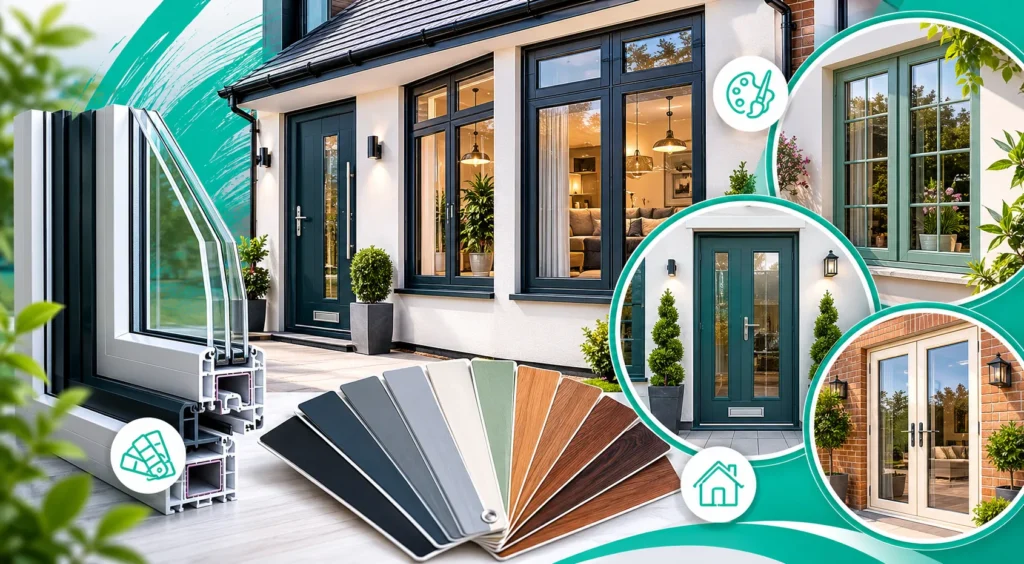
White used to be the only real option for uPVC windows. Not anymore.
Here are the colours UK homeowners are choosing most in 2025:
Anthracite Grey (RAL 7016)
This is the most popular colour by far right now. It’s dark, clean, and modern. It works especially well on new builds and rendered homes. If you’ve seen a house with dark grey windows lately, this is probably the colour.
Slate Grey (RAL 7015)
A slightly softer grey than anthracite. It suits older or period-style homes where a very dark colour might look too harsh. It’s a great middle-ground option.
Chartwell Green (RAL 6021)
This colour has grown massively in popularity. It’s a muted, sage-style green that looks great on Victorian and Edwardian homes. If you want something different but not too bold, this is worth considering.
Jet Black (RAL 9005)
Bold and striking. Black windows make a real statement. They work best on modern homes or properties with white or light grey render.
Cream (RAL 9001)
A warmer, softer alternative to white. Cream suits older homes really well. It feels classic without being boring.
Agate Grey (RAL 7038)
A light, warm grey. Not as dark as anthracite but more interesting than white. Very versatile and works on most property types.
Irish Oak and Rosewood
These are woodgrain effect finishes. They’ve been popular for decades on terraced houses across the north of England. If your home already has these and they’re faded or worn, they can be restored through spraying rather than replaced.
How to Match Your Window Colour to Your Property Type
Not every colour works on every home. Here’s a simple breakdown by property type:
Red Brick Terraced Houses
These are very common in areas like Salford, Stockport, and Tameside across Greater Manchester.
Red and orange brick tones are warm. You want a colour that works with that warmth, not against it.
Good choices: Cream, Chartwell Green, Anthracite Grey Avoid: Very cold or blue-toned greys, they can clash with warm brick
Rendered or Painted Render Homes
Render gives you more freedom. Because the walls are often white, grey, or neutral, most window colours will work.
Good choices: Anthracite Grey, Jet Black, Slate Grey, all look clean and sharp against render
Victorian and Edwardian Properties
These homes have character and history. Bold modern colours can look out of place.
Good choices: Cream, Chartwell Green, Sage Green, Slate Grey, softer and more in keeping with the era
Modern New Builds
Go bold here. New builds suit contemporary colours well.
Good choices: Anthracite Grey, Slate Grey, Jet Black, all look sleek and fresh
Semi-Detached Homes
If your home shares frames with a neighbour (common in semi-detached properties), it’s worth having a conversation before you commit to a colour. In Didsbury, Chorlton, and Sale, many homeowners opt for the dual colour finish, dark on the outside, white on the inside. This keeps neighbours happy while still giving the exterior a modern look.
Should Your Windows and Doors Match?
This is one of the most common questions people ask. The honest answer is, it depends on what look you’re going for.
Matching windows and doors gives your home a clean, consistent look. It’s the safer choice and tends to appeal to more buyers if you’re thinking about selling.
Contrasting windows and doors lets your front door stand out as a feature. For example, grey windows with a deep green or navy front door can look striking and stylish.
There’s no wrong answer here. But there are a few extra things to think about:
- Fascias and soffits: These are the boards around your roofline. If they’re white and you go dark grey on your windows, it can look mismatched. Many homeowners spray everything at the same time.
- Garage door: If you have one, consider whether it ties in with your new window colour
- Guttering: Often overlooked, but it’s very visible. Black guttering works well with darker window colours.
What Are RAL Colour Codes and Why Do They Matter?
You’ll see RAL codes mentioned a lot when it comes to window colours. So what are they?
RAL is a standardised colour system used across Europe. Each colour has a number, for example, Anthracite Grey is RAL 7016. This means no matter who makes the paint or where it’s ordered from, RAL 7016 will always be the exact same shade.
Why does this matter for you?
If you’re getting your windows resprayed, RAL codes mean your colour will be matched precisely. There’s no guessing or “close enough.” At Sprayed Tech Solutions, we use RAL codes on every project to make sure the finish is consistent across all your windows, doors, and frames.
Confused by similar greys? Here’s a quick breakdown:
- RAL 7016: Dark charcoal grey. Very popular right now.
- RAL 7015: Slightly lighter and warmer. Good for older homes.
- RAL 7038: Light grey. Subtle and clean.
If you already have coloured frames and want to match them, a professional sprayer can identify the existing RAL code and match it exactly.
Do Coloured uPVC Windows Fade Over Time?
This is a fair concern. Cheap paint fades. Low-quality DIY jobs peel. So it’s a reasonable thing to worry about.
Here’s the honest answer:
A professionally applied respray will not fade quickly. The key is the type of coating used.
At Sprayed Tech Solutions, we use HMG Nisocoat: a polyurethane solvent-based paint designed for exterior use. It’s built to handle:
- UV rays from the sun
- Rain and damp
- Temperature changes
- Daily wear and tear
The coating chemically bonds to the surface of the frame. This is very different from brushing or rolling paint onto a surface. A sprayed, bonded coating lasts far longer.
A professionally sprayed finish typically lasts 10 or more years with normal care.
DIY spray cans from a hardware shop? Not the same. They don’t use the same coatings and won’t last anywhere near as long.
You Don’t Need New Windows to Change the Colour
This is the part that surprises most people.
Many homeowners assume that if they want a different colour, they have to replace their windows. That means:
- Weeks of disruption
- High costs, often £5,000 to £15,000+ for a full house
- Waste of perfectly good frames
There is a better option, professional uPVC spray painting.
Here’s how it compares:
| Respraying | Full Replacement | |
| Cost | From £120 per window | 3–5x more expensive |
| Time | 1–3 days | Several weeks |
| Disruption | Minimal | Major |
| Result | Factory-like finish | Brand new units |
| Best for | Structurally sound frames | Warped or damaged frames |
If your frames are in good shape, no warping, cracking, or water damage, respraying is almost always the smarter choice.
At Sprayed Tech Solutions, we carry out a full inspection before any work starts. If your frames aren’t suitable for spraying, we’ll tell you honestly.
5 Practical Tips Before You Commit to a Colour
Before you place an order or book a job, here are five things worth doing:
1. Get RAL swatches and hold them against your brickwork. Colours look different in different lights. A colour that looks perfect on a screen might look completely different in your home. Always view physical swatches in natural daylight.
2. Check your street on Google Street View. Look at what colours neighbouring properties have used. You don’t have to match them, but it helps to understand what works in your street.
3. Think about resale value. Bold or unusual colours can be polarising. If you’re likely to sell in the next few years, neutral greys, greens, and creams tend to appeal to the widest range of buyers.
4. Don’t forget the roofline. Fascias, soffits, and guttering are part of the picture. If you’re changing your window colour, think about whether these need updating too. Many homeowners spray them all at the same time.
5. Ask for a written, colour-matched quote. Any reputable spraying company should give you a written quote that specifies the exact RAL code, the coating being used, and the work included. This protects you and ensures you get exactly what you agreed.
Not Sure Which Colour Is Right for Your Home?
That’s completely normal. Choosing a colour from a chart or a screen is hard. Seeing it in your actual home is a different thing entirely.
At Sprayed Tech Solutions, we offer a free assessment and written quote across Manchester and Greater Manchester. We can advise on colour choices based on your property type, your brickwork, and your personal preferences.
We cover Salford, Stockport, Didsbury, Chorlton, Altrincham, Sale, Prestwich, Bury, Bolton, and all surrounding areas.
Whether you want to update faded white frames, switch to modern anthracite grey, or restore worn woodgrain-effect doors, we can help.
📞 Call us on 07851 890 963, or contact us today for your free colour consultation and written quote.
People also ask
Q1. What is the most popular colour for uPVC windows?
Anthracite Grey (RAL 7016) is the UK’s most popular choice. It looks modern and clean on most property types.
Q2. What colour uPVC windows add value to a house?
Neutral colours like Anthracite Grey, Slate Grey, and Cream appeal to most buyers and are safest for adding kerb appeal and value.
Q3. Can you change the colour of uPVC windows without replacing them?
Yes. Professional spray painting changes your uPVC colour cleanly and costs far less than full window replacement.
Q4. What is the difference between RAL 7016 and RAL 7015?
RAL 7016 is darker charcoal grey. RAL 7015 is slightly lighter and warmer. Both are popular but suit different property styles.
Q5. Do coloured uPVC windows fade?
Professionally sprayed windows using polyurethane coatings like HMG Nisocoat resist UV and weathering, lasting 10+ years without fading.
Q6. What colour front door is most popular in the UK?
Anthracite Grey and Chartwell Green are currently the most popular front door colours across UK homes in 2025.
Q7. Should windows and doors be the same colour?
Matching gives a cleaner look. Contrasting lets your door stand out. Both work; it depends on your personal style preference.
Q8. What colour windows go with a red brick house?
Cream, Chartwell Green, and Anthracite Grey all complement red brick well without clashing with warm brick tones.